

Omega 3 Fats Slash Your Risk of Heart Attack by 35%
When it comes to preventing chronic disease, the type and amount of fat you eat is one of the most important factors in your diet.
That’s because they are precursors for a variety of hormones and hormone-like substances. They are required to absorb vital nutrients. Fats also act as the building blocks for cell membranes. This is critical, because it means the type of fats you consume… become the type of fats incorporated into every cell of your body.
Arguably, however, the most important factor fats play in your health is their ability to directly affect your genes. This impacts every cell and system in your body!
All these factors point to the profound importance of avoiding unhealthy fats… while making a point to consume more of those that promote health.
Today, we cover groundbreaking new research on the power of healthy omega-3 fatty acids to dramatically slash your risk for heart disease. You’ll discover how much you need each day to enjoy the benefits, plus the best sources to choose.
But first, a primer on polyunsaturated fatty acids…
Polyunsaturated Fats (PUFAs): A Double-Edged Sword
You’ve probably heard that polyunsaturated fatty acids (PUFAs) – including both omega-3s and omega-6s are “good fats” and that they are “essential” to your health.
This fat fact is only partially true…
PUFAs are considered “essential fatty acids” because your body can’t make them on its own. Therefore, it’s necessary to get these fats from the foods you eat.
However, the human body requires only a small amount of these fats. And they should be consumed in a ratio appropriate to our genetic ancestry. Our ancestors consumed small amounts of omega-6 and omega-3 fats in about a 1:2 ratio.
However, due to the extraordinary amounts of industrially-processed vegetable and seed oils in the modern diet, most people today consume 20 to 50 times more omega-6 fats than they do omega-3s.
And when there is an imbalance – as there is in 99% of the population today – PUFAs become one of the most dangerous elements in our diet. Because of their weak bond structure, PUFAs are highly unstable. They are prone to rancidity and oxidation, which cause free radical damage to our bodies.
Omega-6 fatty acids consumed in excess are directly responsible for the epidemics of obesity, inflammation and metabolic dysfunction that drive almost every chronic disease. These fats are directly linked to increased risk for:
- Obesity
- Blindness
- Diabetes and insulin resistance
- Heart disease
- Cancer
- Autoimmune disease
Because omega-6 fats and omega-3 fats have opposing roles in the body, you may conclude that reducing omega-6 and boosting omega-3 could help reduce the risk of chronic diseases, like heart disease.
And that’s exactly what researchers in the most comprehensive study of its kind found…
Get More Omega-3: Slash Your Risk of Deadly Heart Attack by 35%
A new study, published in Mayo Clinic Proceedings, evaluated 40 clinical trials, covering 135,000 participants to determine the impact of EPA and DHA on heart disease. The researchers found that EPA + DHA supplementation is associated with a significantly reduced risk of:
- Fatal myocardial infarction (35%)
- Myocardial infarction (13%)
- CHD events (10%)
- CHD mortality (9%)
What’s more, the benefits increased with dosage. In fact, by adding an additional 1,000 mg of EPA + DHA per day, overall cardiovascular disease events decreased by 5.8% and risk for heart attack decreased by 9%.
Dr. Aldo Bernasconi, PhD, co-author of this study says:
“Because this paper included more studies and all dosages, the estimates for a dose-response are more precise and the conclusions stronger.”
What’s more, this research backs up the results of a 2019 meta-analysis from Harvard, which analyzed 13 of the largest clinical trials. These two studies combined represent the largest amount of published research ever compiled on the subject of omega-3s and health.
A Personalized Prescription to Upping Your Omegas
To get the benefits shown in these studies, aim for two grams of combined EPA and DHA daily. In addition to enjoying clean-sourced, wild fish like sardines, salmon, mackerel and anchovies, consider supplementing with a clean, high-quality fish oil supplement like Vital Choice Sockeye Salmon Softgels or Carlson’s lemon-flavored liquid fish oil.
According to Dr. Carl Lavie, M.D., one of the study authors:
“People should consider the benefits of omega-3 supplements, at doses of 1,000 to 2,000 mg per day – far higher than what is typical, even among people who regularly eat fish.”
Here’s a quick estimate of the omega-3 content in common foods, so you can gauge your current intake:
- Wild Planet Sardines in Water (6 oz. can) – 1,095 mg EPA & DHA combined
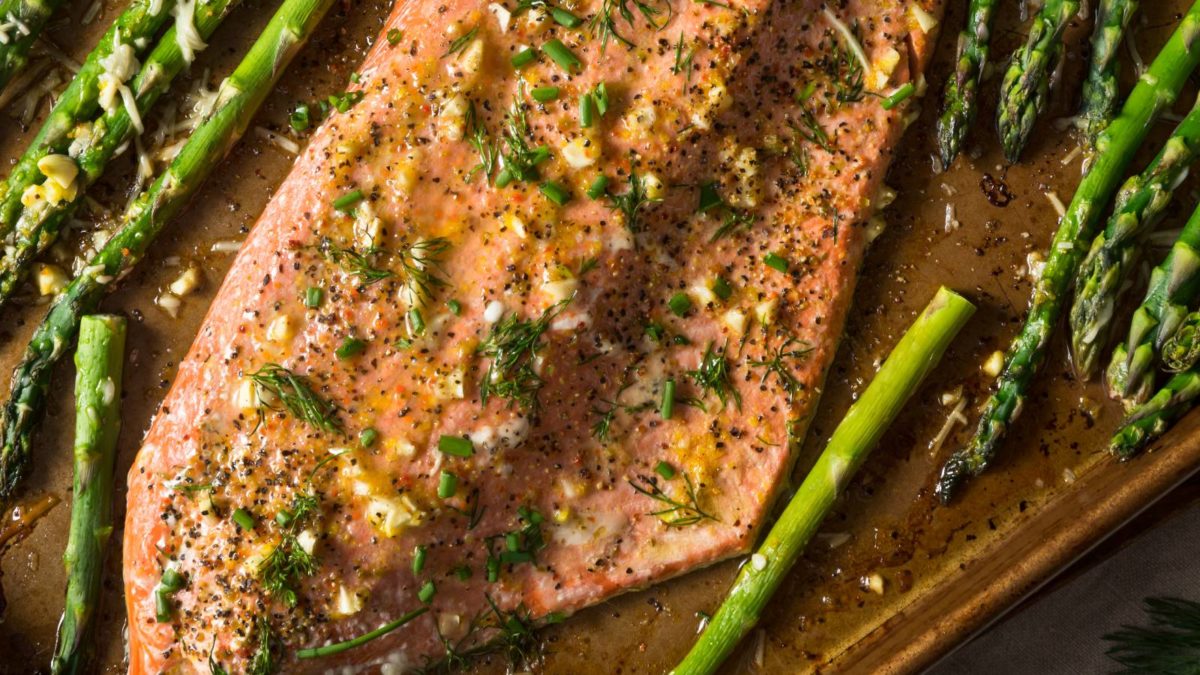
- Wild Salmon (6 oz.) – 2,412 mg EPA & DHA combined
- Salmon Roe (1 oz.) – 1,260 mg EPA & DHA combined
Finally, it is important to note that these benefits cannot be achieved through the vast majority of plant-based omega-3’s. These foods contain the fatty acid, ALA, which must be converted to EPA and DHA.
References (14)
- Simopoulos AP. Human requirement for N-3 polyunsaturated fatty acids. Poult Sci. 2000 Jul;79(7):961-70. doi: 10.1093/ps/79.7.961. PMID: 10901194. (PubMed)
- Innes JK, Calder PC. Omega-6 fatty acids and inflammation. Prostaglandins Leukot Essent Fatty Acids. 2018 May;132:41-48. doi: 10.1016/j.plefa.2018.03.004. Epub 2018 Mar 22. PMID: 29610056. (PubMed)
- Deol P, Kozlova E, Valdez M, et al. Dysregulation of Hypothalamic Gene Expression and the Oxytocinergic System by Soybean Oil Diets in Male Mice. Endocrinology. 2020. (PubMed)
- Simopoulos AP. An Increase in the Omega-6/Omega-3 Fatty Acid Ratio Increases the Risk for Obesity. Nutrients. 2016 Mar 2;8(3):128. doi: 10.3390/nu8030128. PMID: 26950145; PMCID: PMC4808858. (PubMed)
- Simopoulos AP, DiNicolantonio JJ. The importance of a balanced ω-6 to ω-3 ratio in the prevention and management of obesity. Open Heart. 2016 Sep 20;3(2):e000385. doi: 10.1136/openhrt-2015-000385. PMID: 27843563; PMCID: PMC5093368. (PubMed)
- Schnebelen C, Viau S, Grégoire S, Joffre C, et al. Nutrition for the eye: different susceptibility of the retina and the lacrimal gland to dietary omega-6 and omega-3 polyunsaturated fatty acid incorporation. Ophthalmic Res. 2009;41(4):216-24. Epub 2009 May 15. (PubMed)
- Simopoulos AP, DiNicolantonio JJ. Mediterranean diet: ω-6 and ω-3 fatty acids and diabetes. The American Journal of Clinical Nutrition. Volume 106, Issue 3, September 2017, Pages 953–954. (PubMed)
- Simopoulos AP. Evolutionary aspects of diet, the omega-6/omega-3 ratio and genetic variation: nutritional implications for chronic diseases. Biomed Pharmacother. 2006 Nov;60(9):502-7. doi: 10.1016/j.biopha.2006.07.080. Epub 2006 Aug 28. PMID: 17045449. (PubMed)
- Simopoulos AP. Evolutionary aspects of diet, the omega-6/omega-3 ratio and genetic variation: nutritional implications for chronic diseases. Biomed Pharmacother. 2006 Nov;60(9):502-7. doi: 10.1016/j.biopha.2006.07.080. Epub 2006 Aug 28. PMID: 17045449. (PubMed)
- Fradet, V , Cheng, I , Casey, G , Witte, JS . Dietary omega-3 fatty acids, cyclooxygenase-2 genetic variation, and aggressive prostate cancer risk. Clin Cancer Res. 2009;15:2559–66. (PubMed)
- Huerta-Yépez S, Tirado-Rodriguez AB, Hankinson O. Role of diets rich in omega-3 and omega-6 in the development of cancer. Bol Med Hosp Infant Mex. 2016 Nov-Dec;73(6):446-456. doi: 10.1016/j.bmhimx.2016.11.001. Epub 2016 Nov 30. PMID: 29421289. (PubMed)
- Simopoulos AP. Evolutionary aspects of diet, the omega-6/omega-3 ratio and genetic variation: nutritional implications for chronic diseases. Biomed Pharmacother. 2006 Nov;60(9):502-7. doi: 10.1016/j.biopha.2006.07.080. Epub 2006 Aug 28. PMID: 17045449. (PubMed)
- Baker EJ, Miles EA, Burdge GC, Yaqoob P, Calder PC. Metabolism and functional effects of plant-derived omega-3 fatty acids in humans. Prog Lipid Res. 2016 Oct;64:30-56. doi: 10.1016/j.plipres.2016.07.002. Epub 2016 Aug 3. PMID: 27496755. (PubMed)
- Lane K, Derbyshire E, Li W, Brennan C. Bioavailability and potential uses of vegetarian sources of omega-3 fatty acids: a review of the literature. Crit Rev Food Sci Nutr. 2014;54(5):572-9. doi: 10.1080/10408398.2011.596292. PMID: 24261532. (PubMed)




Leave a Reply