

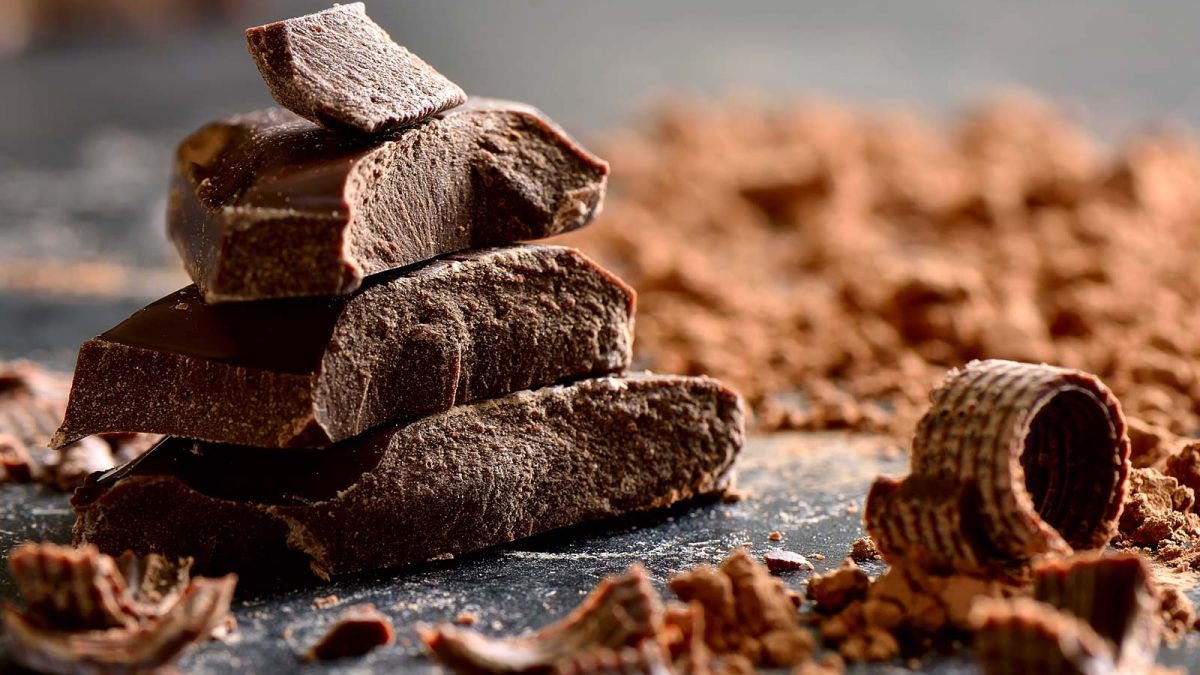
Feel Happier and Be Healthier with CHOCOLATE!
If a simple square of rich, luxurious chocolate seems to brighten your mood, there’s a good reason for it…
Cocoa is packed with compounds which have been shown to promote feelings of euphoria and diminish anxiety. Chocolate also triggers the release of endorphins – the hormones that your own brain produces when it senses happiness.
It’s no wonder that chocolate has been enjoyed for millennia. In fact, the Mayans prized it as a divine gift and source of power and it was even used as currency in the 1500s. And it’s no surprise that millions of people today are devilishly addicted to this “divine” creation.
If you are an admitted “chocoholic” then here’s some great news you’ll be sure to enjoy: the benefits of cocoa extend far beyond the addictive flavor and feel-good compounds. In fact, real chocolate is one of the world’s most powerful superfoods.
Boost Your Health… With Antioxidant-Rich Chocolate
Not only does it have the power to sweeten your mood… it can also boost your memory and learning, improve your health, and dramatically reduce your risk of disease.
Some of the greatest benefits of chocolate are the result of its potent antioxidant activity. In fact, the antioxidant power of raw cocoa powder is off the charts!
The best measure of a food’s antioxidant power is called the oxygen radical absorbance capacity (ORAC). Foods that have a higher ORAC score have a greater ability to neutralize free radicals, the unstable molecules that damage cells and DNA and contribute to aging, heart disease, cancer, Alzheimer’s and more.
The ORAC score of raw broccoli, for example, is 1,362. That’s pretty good. But it’s nowhere near blueberries, which rank near the top of all fruits and vegetables at 6,552. However, even blueberries don’t come close to cocoa, with an ORAC score of 80,933!
And that’s not all. Cocoa is also one of the most concentrated sources of powerful flavonoids. A recent meta-analysis of 24 studies conducted at Harvard showed that these plant-based compounds can:
- Stop the oxidation of LDL (bad) cholesterol
- Boost HDL (good) cholesterol
- Help thin the blood (reducing the potential for dangerous blood clots)
- Enhance the function of red blood cells
- Reduce inflammation
- Reduce insulin resistance
It’s no surprise that numerous studies show a significant inverse association between flavonoid consumption and the risk of heart disease and diabetes.
Ward Off Disease with Dark, Delicious Chocolate
One of these studies involved the cocoa-loving Kuna Indians who live off the coast of Panama. The Kunas drink about 40 cups of cocoa a week – more than any other population. They also have one-sixteenth the number of “age-related” diseases, like cancer and heart disease, as the residents of mainland Panama.
Cocoa is also rich in a compound called epicatechin. Newly published research in The Journal of Neuroscience shows that this natural chemical helps to stimulate blood vessel growth and nerve development in the part of the brain responsible for memory and learning. What’s more, this study found that epicatechin turns on genes that are important for cognitive function, while turning off the genes that play a role in inflammation and neurodegeneration.
Choosing the Best Bar
But before you throw caution to the wind and fill your cupboards with truffle and bon bons, take heed: All chocolate is not created equal.
In fact, most of the chocolate we consume today – a whopping 3 billion pounds a year – is a product that has been processed, devitalized and treated with chemicals, stripping this “divine” superfood of its healing powers.
When choosing cocoa and chocolate products, here are the things you should avoid:
- Trans fats/ hydrogenated oils: Most commercial chocolate products – even those that seem healthy or are made with dark chocolate – can contain hydrogenated oils. Always read labels.
- Preservatives, artificial colors or flavors: Manufacturers use a number of chemical preservatives and flavorings in chocolates. The most common ones (like vanillin, BHA and BHT) act as hormone mimics or carcinogens. The fewer ingredients, the better.
- High sugar content: If you’re eating sugar-laden chocolate, you’re negating most of the health benefits of cocoa. Opt for chocolates with fewer than 10 grams of sugar per serving.
- Dutch process: Dutching, or alkalizing, uses chemicals to mellow the flavor of cocoa. Not only does this taint the finished product with a caustic chemical, but according to the USDA, it reduces the antioxidant capacity by half.
As you venture beyond the candy aisle, you will find a world of real chocolate products like raw cacao, cocoa nibs, and natural, artisanal cocoa products made with just a few simple ingredients and brimming with rich flavor and health benefits.
In general, the stronger and darker the cocoa, the more flavonoids it contains and the more protection it offers. So be sure to choose dark chocolate products that are naturally or organically produced and contain 70% or more cocoa content to get the most health benefits.
Satisfy Your Chocolate Cravings — Without the Sugar Crash
Over the last 10 years, I have been on a mission to re-create America’s favorite desserts using nutrient-dense, body-friendly, ingredients that promote health!
I’ve developed more than 50 deeply satisfying dessert recipes — along with keto-friendly breads — that deliver real indulgence without the metabolic consequences. And unlike most “keto” recipes out there, the vast majority in my books are dairy-free (or include simple swaps like coconut oil for butter).
If you’re a true chocolate and dessert lover… and you want indulgence that supports your energy, metabolism, and mood instead of sabotaging it…
👉 Explore the Keto Baking Bundle here.
References (6)
- Journal of Neuroscience (Society for Neuroscience), May 30 2007, Volume 27, Issue 22. “Plant-Derived Flavanol Epicatechin Enhances Angiogenesis and Retention of Spatial Memory in Mice” Authors: H van Praag, MJ Lucero, GW Yeo, K Stecker, N Heivand, C Zhao, E Yip, M Afanador, H Schroeter, J Hammerstone, and FH Gage.
- Maron DJ. Flavonoids for reduction of atherosclerotic risk. Curr Atheroscler Rep. 2004 Jan;6(1):73-8. (PubMed)
- Knekt P, Kumpulainen J, Jarvinen R, Rissanen H, Heliovaara M, Reunanen A, Hakulinen T, Aromaa A. Flavonoid intake and risk of chronic diseases. Am J Clin Nutr 2002 Sep (PubMed)
- ORAC Report 2007, USDA
- American Heart Association’s Nutrition, Physical Activity and Metabolism/Cardiovascular Disease Epidemiology and Prevention 2011 Scientific Sessions.
- Shrime MG, Bauer SR, McDonald AC, Chowdhury NH, Coltart CE, Ding EL. Flavonoid-rich cocoa consumption affects multiple cardiovascular risk factors in a meta-analysis of short-term studies. J Nutr. 2011 Nov;141(11):1982-8. Epub 2011 Sep 28. (PubMed)


as a chocoholic, i am actually trying hard to wean off my daily habit of high quality dark chocolate as my daily dose is about 2 to 2 .5 ounces. not moderate! i have concerns over cocao raising iron and copper levels? as well we the stearic acid in chocolate raising the LPa component of Cholesterol though cocao is LDL neutral do you have any insight into either the copper or iron (and lead) as well as the stearic acid issue?