

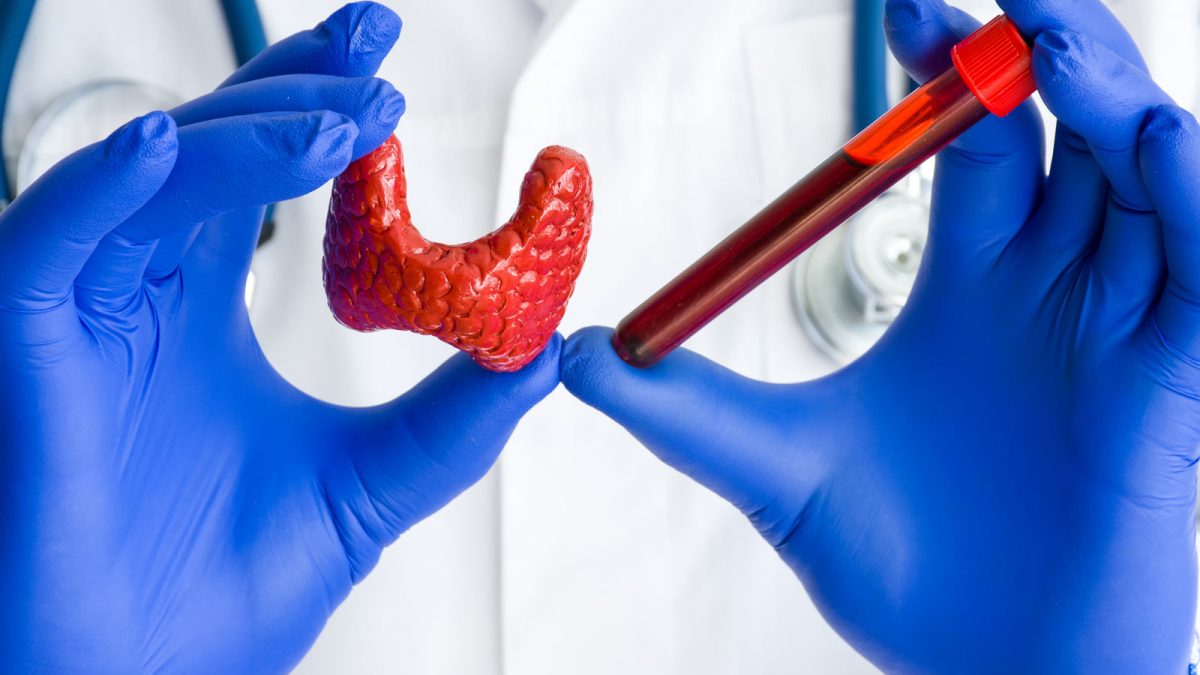
The Connection Between Thyroid Disease and Inflammation
In 2009, the journal, Inflammation Research, published a study presenting the case that chronic inflammation is the root cause of several major diseases. As you’re probably aware, inflammation plays a role in the incidence of cancer, heart disease, diabetes, autoimmunity and Alzheimer’s.
But the number of conditions impacted by inflammation doesn’t stop at the “Big Four”…
In fact, one of the most common health conditions in our modern world is also directly impacted by inflammation. I’m talking about thyroid disorders, which affect 20 million Americans and tens of millions more worldwide.
Unfortunately, however, the contributing factor of inflammation is often overlooked when it comes to the thyroid. The good news is that with the right dietary and supplement strategy, it is possible to “turn off” the inflammatory response… and therefore reduce your risk of disease and potentially remedy many thyroid conditions.
But before we get to that, it’s important that you understand the nature of “inflammation”…
Inflammation: A Double-Edged Sword
Inflammation is the complex biological process by which the body responds to injury or an infection. It is a response that can help your body neutralize and destroy harmful pathogens, damaged cells and other chemical and biological irritants.
In other words, inflammation is a normal process. In fact, it is a cornerstone of your immune system and a foundational healing mechanism.
The word itself comes from the Latin, “inflammatio” – to set on fire. This relates to the redness, warmth and swelling you might experience around an injury. Inflammation is also at work when a fever raises your core body temperature. Without acute inflammation, wounds and systemic infections would never heal and your survival would be compromised.
But sub-clinical inflammation that occurs within your body does not come with the obvious signs of swelling, heat or fever. This “chronic inflammation” slips silently under the radar. And left unchecked, it can cause or worsen nearly form of disease.
And while there are many biological markers for inflammation, one of the most important is a compound called, homocysteine.
Homocysteine: The Inflammatory Amino Acid
Homocysteine (Hcy) is an amino acid produced in the body. And while it is perfectly normal to have homocysteine in the blood, high levels are clearly linked to autoimmune conditions, heart attacks and stroke.1
Stress, a nutrient-poor diet and various dietary and exogenous toxins can all raise homocysteine levels to dangerous levels. To keep homocysteine in check, your body uses a process known as methylation.
Methylation is a biological process that happens inside every cell in your body, where a single carbon and three hydrogen atoms (called a methyl group) are added to another molecule. This occurs billions of times per second. And while the process is quite basic, it is also vitally important to every system in your body!
That’s because methyl groups contribute to a wide range of functions and help to control:
- The stress response (fight or flight)
- The production and recycling of glutathione — the body’s master antioxidant
- The detoxification of hormones, chemicals and heavy metals
- The inflammation response
- Genetic expression and the repair of DNA and cells
- Neurotransmitters and the balancing of brain chemistry
- Energy production
- The immune system – including T-cell production and regulating the immune response
If you are low in methyl groups, all of these processes become compromised. The result can be poor health, low energy and heightened risk of disease, particularly thyroid disease. It can also lead to a weakened immune system – or on the flip side an overactive immune system that cannot distinguish self from non-self and contributes to autoimmune conditions, like Hashimoto’s Thyroiditis.2
Unfortunately, there are many factors can negatively affect methylation.
So, let’s take a look at the…
Four Key Factors that Impair Your “Mighty Methylators”
Genetics: The MTHFR Gene and Your Thyroid
Methylenetetrahydrofolate reductase (MTHFR) is an enzyme that is essential to convert harmful homocysteine to back to harmless methionine.
But in order for this important process to occur, we need riboflavin (vitamin B2). This B vitamin is the precursor for a cofactor in the production of MTHFR.3
And because thyroxine (the T4 thyroid hormone) is needed to convert riboflavin to this important methylating co-factor, people with insufficient thyroxine (like we see in hypothyroidism), have difficulty making the conversion. The result is reduced MTHFR activity. 4,5
What’s more, many people also have an MTHFR gene mutation that reduces the ability of the enzyme and further compounds the problem.6
If you have the MTHFR gene polymorphism, work with a functional medicine practitioner to help improve your methylation. Because we are all unique, those with MTHFR defects have varying degrees of methylation impairment. There is no one-size-fits-all approach.
It’s also important to note that with treatment, you can experience overmethylation which can cause a number of unpleasant side effects, as well.
Diet: Getting the Key Nutrients for Methylation
What you eat plays a very large role in healthy methylation. That’s because nutrients and dietary components affect how your genes are expressed!7
While the most supportive evidence exists for folate – a key nutrient that provides the methyl units for DNA methylation – other nutrients also play an important role in methylation.8 In addition to riboflavin discussed above, vitamin B6, vitamin B12, magnesium, and zinc are vitally important.9
The Journal of Nutrition has reported that folate, B6 and B12 will effectively lower inflammatory homocysteine in more than 95% of cases.10 As you now know, this is the result of boosting your body’s ability to methylate.
Gut Imbalances: You Aren’t What You Eat, But What You Absorb
Eating the foods that support healthy methylation is imperative. But without healthy digestion and absorption, those nutrients can’t be utilized by your body.
Low stomach acid (HCL) and small intestinal bacterial overgrowth (SIBO) are two key factors that can impair absorption and cause difficulties with proper methylation and homocysteine.11
Unfortunately, SIBO is quite common in people with low thyroid because thyroid hormones influence the transit time of nutrients and waste through the gut. What’s more, treatment with the commonly prescribed thyroid medication (Levothyroxine) actually increases the risk for SIBO.12
Similarly, low stomach acid (hypochloridia) is also very common in people with thyroid disease. This can be due to the metabolic slowing that occurs in this disease, the potential for an autoimmune attack on the acid-secreting cells in the stomach, as well as an infection with H. pylori which reduces the production of stomach acid.13,14
If you think you may have either of these conditions, talk with your functional medicine practitioner and create a plan to get your digestion back on track.
Toxins: A One-Two Punch to the Thyroid
Not only is the thyroid itself very sensitive to toxins, but toxic compounds can have a powerful, negative effect on methylation.
Pesticides, cigarette smoke, xenoestrogens (like BPA found in plastics), lead and arsenic have systemic effects and can impair methylation and promote inflammation.15,16,17,18
In addition to the above, numerous prescription and over-the-counter medications as well as many chemicals can have toxic effects and negatively impact folate metabolism and methylation.19,20
So it’s important to minimize your exposure and take measures regularly to help your body detoxify. Using an infrared sauna and fasting are two highly-effective methods.
An Anti-Inflammatory Ancestral Diet for Thyroid Health
To benefit your thyroid, immune system (and overall health!), an anti-inflammatory, nutrient-dense, ancestral diet is key.
Here are the key foods that provide the highest levels of methylating nutrients:
- Folate: Beef liver, spinach, asparagus, Brussels sprouts, Romaine lettuce, avocado, broccoli
- Zinc: Oysters, crab, lobster, grass-fed beef, bison and lamb, pastured poultry and pork, pumpkin seeds
- Vitamin B12: Beef liver, sardines, mackerel, lamb, wild salmon, grass-fed beef, eggs
- Vitamin B6: Pastured turkey, grass-fed beef, pistachios, tuna, avocado, chicken breast, sunflower seeds, sesame seeds
- Magnesium: Spinach, swiss chard, dark chocolate, pumpkin seeds, almonds, avocado, yogurt/kefir21
- Riboflavin: Beef liver, lamb, milk and yogurt, mushrooms, spinach, almonds, wild salmon, eggs
While diet alone may be enough for some people to support healthy methylation, supplementing with methylated forms of B vitamins may be necessary in those with compromised absorption or high levels of homocysteine.
References (21)
- Lazzerini PE, Capecchi PL, Selvi E, et al. Hyperhomocysteinemia, inflammation and autoimmunity. Autoimmun Rev. 2007;6(7):503-9. (PubMed)
- Richardson B. DNA methylation and autoimmune disease. Clin Immunol. 2003;109(1):72-9. (PubMed)
- Moat SJ, Ashfield-Watt PA, Powers HJ, Newcombe RG, McDowell IF. Effect of riboflavin status on the homocysteine-lowering effect of folate in relation to the MTHFR (C677T) genotype. Clin Chem. 2003;49(2):295-302. (PubMed)
- Otto Mayer, Jr, Jaroslav Šimon, Jan Filipovský, Markéta Plášková, and Richard Pikner. Hypothyroidism in coronary heart disease and its relation to selected risk factors. Vasc Health Risk Manag. 2006; 2(4): 499–506. (PubMed)
- Cimino JA, Jhangiani S, Schwartz E, Cooperman JM. Riboflavin metabolism in the hypothyroid human adult. Proc Soc Exp Biol Med. 1987;184(2):151-3. (PubMed)
- Robertson KD. DNA methylation and human disease. Nat Rev Genet. 2005 Aug;6(8):597-610. (PubMed)
- Lim U., Song MA. Dietary and Lifestyle Factors of DNA Methylation. In: Dumitrescu R., Verma M. (eds) Cancer Epigenetics. Methods in Molecular Biology (Methods and Protocols), vol 863. Humana Press, Totowa, NJ (Link)
- Lim U, Song MA. Dietary and lifestyle factors of DNA methylation. Methods Mol Biol. 2012;863:359-76. (PubMed)
- Davis CD, Uthus EO. DNA methylation, cancer susceptibility, and nutrient interactions. Exp Biol Med (Maywood). 2004;229(10):988-95. (PubMed)
- Refsum H1, Nurk E, Smith AD, et al. The Hordaland Homocysteine Study: a community-based study of homocysteine, its determinants, and associations with disease. J Nutr. 2006 Jun;136(6 Suppl):1731S-1740S. (PubMed)
- Dukowicz A, Lacy B, Levine G. Small Intestinal Bacterial Overgrowth. Gastroenterol Hepatol (N Y). 2007; 3(2): 112–122. (PubMed)
- Brechmann T, Sperlbaum A,Schmiegel W. Levothyroxine therapy and impaired clearance are the strongest contributors to small intestinal bacterial overgrowth: Results of a retrospective cohort study. World J Gastroenterol. 2017; 23(5): 842–852. (PubMed)
- Rafsanjani FN, Z Asl S, Naseri MK, Vahedian J. Effects of thyroid hormones on basal and stimulated gastric acid secretion due to histamine, carbachol and pentagastrin in rats. Saudi Med J. 2003;24(4):341-6. (PubMed)
- Smolka AJ1, Backert S. How Helicobacter pylori infection controls gastric acid secretion. J Gastroenterol. 2012;47(6):609-18. (PubMed)
- Zhang X1, Wallace AD, Du P, Kibbe WA, et al. DNA methylation alterations in response to pesticide exposure in vitro. Environ Mol Mutagen. 2012;53(7):542-9. (PubMed)
- Siedlinski M, Klanderman B, Sandhaus RA, et al. Association of cigarette smoking and CRP levels with DNA methylation in α-1 antitrypsin deficiency. Epigenetics. 2012;7(7):720-8. (PubMed)
- Senut MC, Sen A, Cingolani P, Shaik A, Land SJ, Ruden DM. Lead exposure disrupts global DNA methylation in human embryonic stem cells and alters their neuronal differentiation. Toxicol Sci. 2014 May;139(1):142-61. (PubMed)
- Steinmaus C, Moore LE, Shipp M, et al. Genetic polymorphisms in MTHFR 677 and 1298, GSTM1 and T1, and metabolism of arsenic. J Toxicol Environ Health A. 2007;70(2):159-70. (PubMed)
- Lambie DG, Johnson RH. Drugs and folate metabolism. Drugs. 1985;30(2):145-55. (PubMed)
- Nervo M, Lubini A, Raimundo FV, et al. Vitamin B12 in metformin-treated diabetic patients: a cross-sectional study in Brazil. Rev Assoc Med Bras (1992). 2011;57(1):46-9. (PubMed)
- https://ndb.nal.usda.gov/ndb/search/list



Leave a Reply