

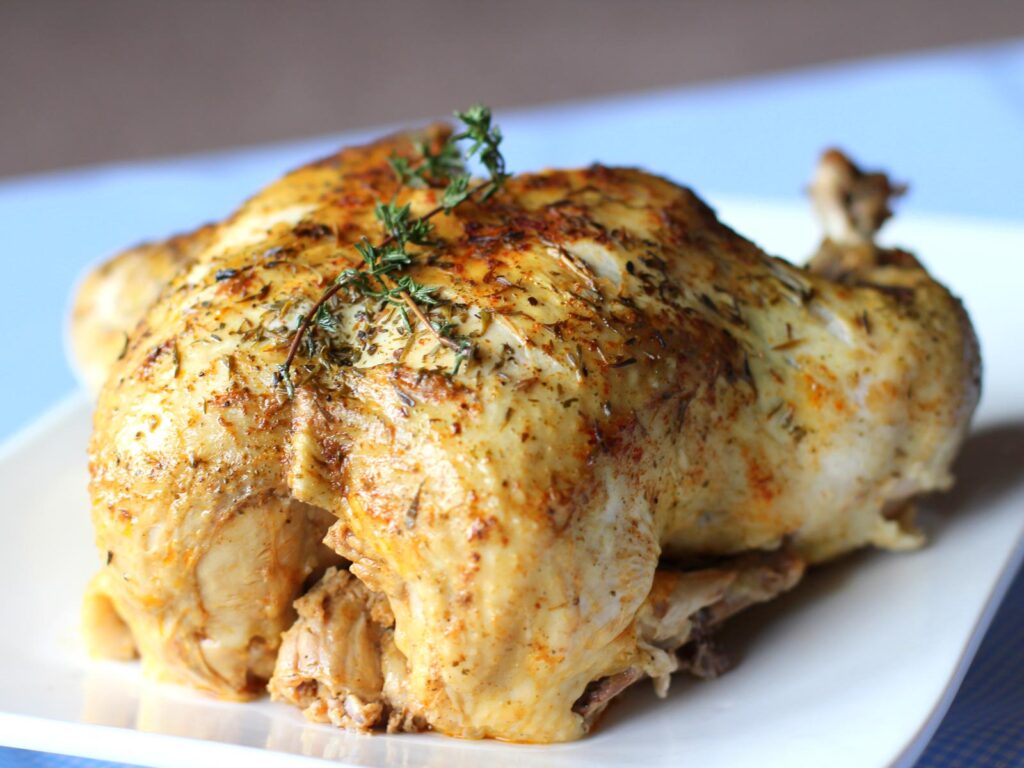
What if I told you that there was a way to cook your food with the following results:
- Up to 90 percent less cooking time
- 90 percent nutrient retention
- Greater digestibility
- Fewer harmful cooking byproducts
And what if I told you that this method will also produce some of the most succulent, flavorful and easy-to-make meals that you have ever set on the table?
Sounds too good to be true, right? Well, it’s not! In fact, this unique way of cooking has been around for more than 300 years, since its invention by a French physician in 1679.

What is this cooking method? Pressure cooking!
You’ve probably tasted foods prepared in a pressure cooker before, perhaps from your mother or grandmother. But you may have shied away from using one due to their “dangerous” reputation. The truth is that while there are some stories about “exploding” pressure cookers, these stories almost invariably relate to the early-generation models used in the 1940s and 50s. Today’s pressure cookers (Amazon link) are virtually foolproof and are no less safe than any other kitchen tool when used properly.
So, let’s take a look at the many benefits of using a pressure cooker:
#1 – Using a Pressure Cooker Provides Superior Nutrient Retention and Bioavailability
Researchers estimate the nutrients in our foods have declined dramatically (up to 50 percent in some foods) due to the depletion of nutrients in the soil. When you combine that with many cooking methods, which destroy or drain nutrients away from your food, the result is meals that just don’t provide the nutritional value your body needs.

A pressure cooker can greatly reduce the time it takes to cook your food. This directly correlates with the loss of fewer heat-sensitive nutrients. Let’s take a look at the research:
- In Plant Foods for Human Nutrition, researchers found that pressure cooking was the best method for retaining both vitamin C and beta-carotene in spinach and amaranth
- A study published in The Journal of Food Science found that pressure cooked broccoli retained 90 percent of its vitamin C content. Compare this to boiling (66 percent retention) or steaming (78 percent).
- A study published in the Journal of Food Science and Technology found that pressure cooking increased the amount of beneficial phenolics in bananas. Researchers believe that the high pressure broke the banana’s cell walls, making the nutrients more bioavailable.
But using a pressure cooker won’t just help boost the levels of nutrients you get from your food… it can also help reduce health harming compounds, as well.
#2 – Using a Pressure Cooker Helps to Reduce Health-Harming Compounds (Including Acrylamide, HCA’s, Lectins and Phytic Acid)
Because a pressure cooker basically uses “steam under pressure”, foods stay moist. They are literally bathed in steam as they cook. This translates to juicier, better tasting food. It also helps eliminate two cancer-causing compounds (acrylamide and heterocyclic amines) which are often produced by other high-heat cooking methods.
And if you’re concerned about lectins and phytic acid – two anti-nutrients in grains, legumes and pseudograins like quinoa which can bind to minerals and make them indigestible – the pressure cooker can help there too.
In fact, another study published in Plant Foods for Human Nutrition showed that when peas were soaked overnight and then boiled, their phytic acid content was reduced by 29 percent. On the other hand, when they were soaked overnight and then pressure cooked, the reduction in this unhealthy anti-nutrient was almost double (54 percent).
Similar results were found with lectins in the Journal of the Science of Food and Agriculture.
#3 – Pressure Cooking Helps Boost Digestibility
As you may have heard before, you’re not what you eat… but rather, what you absorb.
Boosting the digestibility of your food is a key to maximizing the potential nutritional value of every bite.
And the pressure cooker can help you accomplish this too.
The combination of steam and pressure can make even the toughest meats succulent and tender. And tenderness is a key sign that a food is easy for your body to digest.
In the case of the hard-to-break-down protein in legumes, the pressure cooker has been found to increase the digestibility by as much as 84 percent.
#4 – Save Time and Money with a Pressure Cooker
If all of these benefits aren’t enough to get you pressure cooking, consider this: You’ll also save time and money.
You can cook a whole chicken to fall-off-the-bone tender in just half an hour… make butter-knife tender shredded pork or beef in less than 2 hours… make gelatin-rich bone broth in 30 minutes… cook a large winter squash in 10 minutes… as well as Brussels sprouts and most other veggies in less than five!
And by saving cooking time, you’ll also save money on your electric bill.
If you don’t have a pressure cooker yet, there are many high-quality, inexpensive options available. The third-generation Instant Pot is the one I use. The vessel is made of stainless steel, which is another benefit if you are concerned about the leaching that can occur in ceramic slow-cookers or the chemicals in non-stick coatings. The cost is about $115 and it comes with a variety of safety features and ease-of-use benefits.
Once you start cooking these fast, nutrient-rich, fork-tender meals with your pressure cooker, you’ll never want to use anything else!
We want to hear from you! Do you use a pressure cooker? If so, what kind do you use and what is your favorite dish to make?



I have a Kuhn Rikon and cook meats and vegetables beautifully. To discover boiling and poaching eggs successfully was a revelation. Timing of course is vital. It’s science and if the rules are obeyed then the ease, cost, nutritional value and speed of pressure cooking is a joy.
You have an excellent web site Kelley, which I thank you for sharing.
Cheers y’all,
Kevin.
I got the Instant Pot back in November of last year, and I absolutely love it!! I use it 3-4 times a week and cook all kinds of things in it. I didn’t get many recipes with it so just started experimenting a little. I found it best to cook your meat until done, then add the veggies and cook for a few minutes longer. This keeps the veggies from turning to mush. I’ve done all kinds of soups, stews, roasts, rice, veggies, and all kinds or grains like split wheat and steel cut oats. I have a chicken at home and plan to try your roast chicken recipe tonight. Thanks for all the info on the bone broth, I plan to use the leftover bones from the chicken to make some extra gelatin tonight.
Great post – this thought has been bothering me since i got an Instant Pot.
One of the concerns I have is – the rubber/silicone/plastic …not sure what material – inside of the lid -is it safe ? Is it not emitting anything dangerous ? Traditional pressure cookers (stove top ones) do not have a plastic/rubber inside the lid…
Also – are we challenging nature by coming up with technology by doing things quicker – food was supposed to be cook with natural fuel – are we going against nature?
Not questioning anyone but trying to make sure I am feeding my family healthy stuff –not exposing them to anything harmful by cooking things faster, using electricity –going away from traditional methods
Hi Kelley- I have used a regular pressure cooker for years, but I thought I would try the next generation pressure cooker. I have tried several times going to the link you gave to Amazon, but the problem is that every time I have tried to place an order it says “ships in 1 to 2 months”. I can’t find one at any of the local or online stores either. Do you know of any other sources? Thanks for your help!
Hi Gayla,
Its probably because of their wild popularity – the company must be having trouble keeping up with demand. My guess is that Amazon will have them first since they were the #1 kitchen tool on Amazon.
It will be worth the wait, I promise!
Best,
Kelley
Hello, can you provide some evidence to your claim that the IP helps reduce Acrylamide? I am curious how it ‘eliminate two cancer-causing compounds (acrylamide and heterocyclic amines) which are often produced by other high-heat cooking methods’.
Thank you!
Hi Sara,
I’ve done quite a bit of research on all of these cooking compounds – LOPs, AGEs, HCAs, acrylamide – and published them in my book series, The Food Cure.
There’s lot’s of info on this site on those compounds with the references listed so you can read the studies.
Generally speaking, these compounds are formed at higher temperatures and with dry heat (acrylamide with carb foods; HCAs with protein foods). For example, potatoes cooked in hot oil or baked at high temps form acrylamide; potatoes boiled do not. Grilled and broiled meat forms HCAs; slow cooked meat does not.
Please check out the articles listed here:
https://healinggourmet.com/?s=acrylamide
https://healinggourmet.com/?s=heterocyclic+amines
I’m glad you are interested in this topic – it is a little-known cause of free radical damage in our bodies and can be prevented using the right cooking methods!
Be Well,
Kelley
PS – You say ” often produced by other high heat cooking methods”. But high pressure cooking allows you to cook at a lower temperature. Temperature and pressure are inversely related.
Kelly, I like your comments that are meant to guide cooks who are new to the idea of pressure cooking. All but one comment, that is. On February 7, 2018 at 7:38 pm, you wrote the following: PS – You say ” often produced by other high heat cooking methods”. But high pressure cooking allows you to cook at a lower temperature. Temperature and pressure are inversely related. This is not true, Kelly. If you raise the temperature of a gas in a closed container the pressure rises proportionally. Thus, temperature and pressure are directly related, not inversely related. Just recall that as the pressure rises in a pressure cooker, the cooking temperature also rises. At sea level, the temperature can rise to 250°F in most of the popular pressure cookers. You made the same erroneous comment on March 8, 2016 at 11:24 pm, I noticed. If I have misinterpreted your writing, I apologize. That said, I commend you highly for the help you give to your readers.
Hi Paul!
Thanks for being the Physics Police! You are right about one thing (and I will correct in the comments you highlight): Gay-Lussac’s law says that as the pressure in sealed container goes up, the temperature goes up, or as temperature goes up pressure goes up. P=kT. It has been 23 years since my last college physics class, so thank you for the correction – it’s proportional, not inverse.
Now, back to the point I am trying to make here about why pressure cooking is healthier…
The maximum temperature in a pressure cooker is 250 F. That is an extremely LOW temperature for which to cook food. In fact, the harmful compounds in food – like LOPs, AGEs, HCAs and acrylamide – form at higher temperatures and form more readily in a dry environment. For example, cooking potatoes at high temperature (400 F) in a dry oven will produce more acrylamide than if you were to boil potatoes. Heterocyclic amines (HCAs) form more readily in a broiled piece of beef… than a stewed, slow cooked or pressure cooked piece of meat… and so on. For these reasons, pressure cooking is a healthier way to cook food.
By the way, for someone with such keen attention to detail, please note that my name is spelled Kelley, not Kelly 🙂
I appreciate all the great information Kelley, I am a noobie to these but just got a Foodi Ninja at Sams for $189.00 after reading this and researching. It is a pressure cooker that crisp, with a built in crisp lid and fan, you raise it to put the removable pressure cooker lid on for meats then you can brown the meat, easy to raise the electric lid and check on browness as it shuts the fan and burner off . It Is fantastic and has a ceramic bowl and several racks. Gets great reviews on Amazon. It is 6.5 qt and can do a entire chicken if you get a smaller one, I`m very impressed with the quality and its beautiful. It comes w a recipe book.