

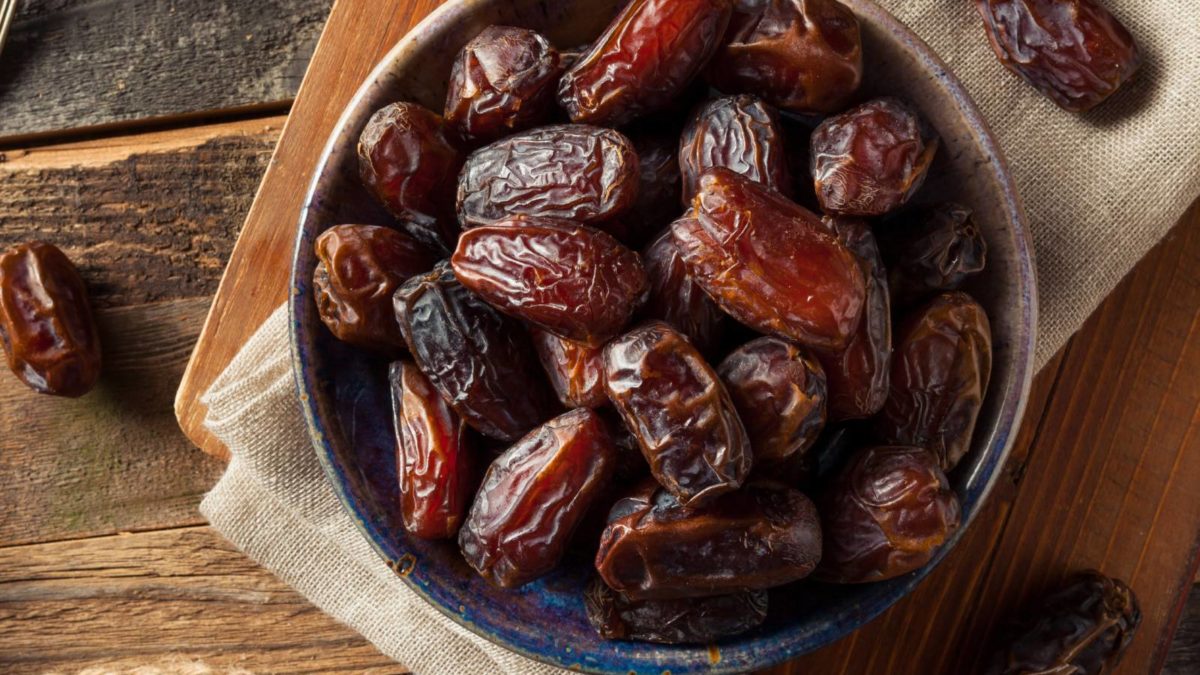
The Sugar that Alters 900 Brain Genes
When diagnosed with a chronic disease, the default response for many people is to blame their genes.
It runs in the family – it’s just my genetics!
For a long time, it was believed that our genes dictate our destiny. However, we now know that our lifestyle choices exert a lot more influence on the diseases we develop, than previously thought.
In fact, what we eat today impacts how our genes will express themselves tomorrow – and whether those genes promote health… or disease.
Today, you’ll discover a form of sugar found to alter more than 900 genes in the brain, setting the stage for chronic diseases, including Alzheimer’s, diabetes, cancer and more.
Plus, you’ll also discover a unique compound – found only in animal foods – that can help to counteract the gene-altering effects of sugar on the brain…
Fructose: A Systemic Poison that Promotes Chronic Disease
For decades, sugar consumption was thought to be rather benign, with few side effects other than the development of cavities.
But over the last twenty years, the research on sugar and chronic disease has stacked up, implicating the “sweet stuff” in a host of debilitating diseases. And one form of sugar has proven to be especially harmful: Fructose.
Studies have clearly linked fructose consumption with fatty liver disease (even in children!), obesity, numerous forms of cancer, diabetes and metabolic syndrome, heart disease, IBS, pregnancy and fertility issues, Alzheimer’s, Parkinson’s and many more.[i][ii][iii][iv][v][vi][vii][viii][ix][x][xi][xii][xiii][xiv]
You might be wondering: How could so many seemingly unrelated diseases be linked to fructose?
Fructose: Damaging Genes, Creating Disease
Researchers at UCLA recently uncovered the association at the most fundamental level: Your genes.
In the study, researchers first trained rats to escape from a maze. Then they randomly divided the rats into three groups:
- Fructose water equivalent to drinking one liter of soda per day
- Fructose water plus an omega-3 fatty acid (DHA)
- No fructose and no DHA
For six weeks, the rats adhered to their specific diets. Then, they were put through the maze again and evaluated. The results were astounding…
The rats in the fructose-only group navigated the maze half as fast as the rats that drank water only, indicating fructose had impaired their memory. However, the performance of the rats given fructose plus DHA was very close to that of the rats which drank only water. This indicates that the DHA omega-3 fatty acids exerted a protective effect.[xv]
But why did the fructose cause such a drastic decline in the rats’ ability to navigate?
The researchers sequenced more than 20,000 genes in the rats’ brains. They found a total of 900 genes that were altered by fructose! The altered genes were observed in the hypothalamus (the brain’s control center) and the hippocampus (responsible for learning and memory).
And while rats and humans differ quite a bit, the fructose-altered genes are comparable to those in humans, impacting metabolism, inflammation and cell communication.
What’s more, two genes – BGN and FMOD – were of special importance. These two genes were the first to be affected by the fructose… and went on to modify hundreds of other genes, in a domino-like effect.
DHA: The Fatty Acid that Resets Genes Back to Their Factory Setting
So what about the DHA? How does it confer protection against fructose-induced damage?
Dr. Xia Yang, senior author of the study and UCLA assistant professor of integrative biology said:
“DHA changes not just one or two genes; it seems to push the entire gene pattern back to normal, which is remarkable… and we can see why it has such a powerful effect.”
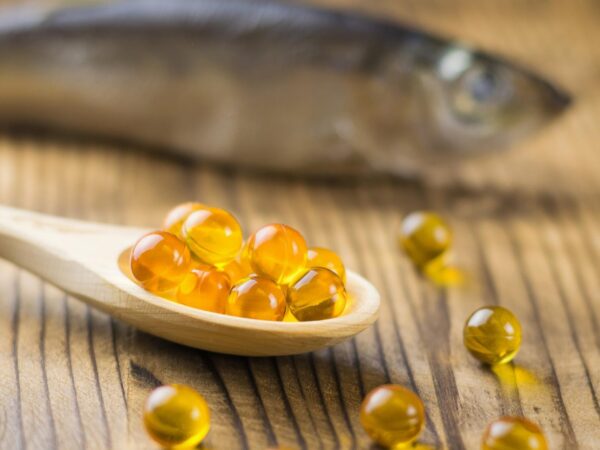
You might already know that DHA is a long chain fatty acid found primarily in cold water wild fish, like wild salmon, mackerel, halibut, sardines, salmon roe, shrimp, scallops and more.
You may also know that DHA is an “essential” fatty acid. That means you cannot make it inside your body – it must be consumed. And unfortunately, up to 90% of Americans are deficient in this disease-fighting, gene-fixing fat![xvi][xvii]
And that’s really bad news because a population study conducted at Harvard found that omega-3 deficiency is the sixth biggest killer of Americans. It’s even more deadly than consuming excess heart-stopping trans fat![xviii]
Get More DHA (and Less Fructose) for a Longer, Healthier Life
Keeping your fructose consumption low and enjoying adequate EPA from wild seafood is a great way to promote the healthy gene expression that can help you prevent chronic disease.
Fructose is found in packaged foods, syrups and soft drinks, as well as foods marketed as “healthy” like dried and fresh fruits.
In addition, be sure to choose grass-fed beef, lamb, bison and other game meats, which have a far healthier ratio of omega-3’s to omega-6’s than their grain-fed counterparts.[xix]
References (1)
[i]Abdelmalek M, Suzuki A, Guy C, et al. Increased fructose consumption is associated with fibrosis severity in patients with nonalcoholic fatty liver disease. Hepatology. 2010. NA DOI: 10.1002/hep.23535 (PubMed)
[ii] Ouyang X, Cirillo P, Sautin Y, et al. Fructose consumption as a risk factor for non-alcoholic fatty liver disease. Journal of Hepatology. 2008. 48 (6): 993 DOI: 10.1016/j.jhep.2008.02.011 (PubMed)
[iii] Goncalves M, Lu C, Tutnauer J, et al. High-fructose corn syrup enhances intestinal tumor growth in mice. Science. 2019. 363 (6433): 1345-1349 DOI: 10.1126/science.aat8515 (PubMed)
[iv] Khitan Z, Kim DH. Fructose: a key factor in the development of metabolic syndrome and hypertension. J Nutr Metab. 2013;2013:682673. doi:10.1155/2013/682673 (PubMed)
[v] Santhekadur P. The dark face of fructose as a tumor promoter. Genes & Diseases. October 16, 2019. https://doi.org/10.1016/j.gendis.2019.10.001 (PubMed)
[vi] Ter Horst KW, Serlie MJ. Fructose consumption, lipogenesis, and non-alcoholic fatty liver disease. Nutrients. 2017;9(9):E981. (PubMed)
[vii] Malik VS, Pan A, Willett WC, Hu FB. Sugar-sweetened beverages and weight gain in children and adults: a systematic review and meta-analysis. Am J Clin Nutr. 2013;98(4):1084–1102. doi: 10.3945/ajcn.113.058362. (PubMed)
[viii] Ma J, McKeown NM, Hwang SJ, et al. Sugar-sweetened beverage consumption is associated with change of visceral adipose tissue over 6 years of follow-up. Circulation. 2016;133(4):370–377. doi: 10.1161/CIRCULATIONAHA.115.018704. (PubMed)
[ix] de Koning L, Malik VS, Kellogg MD, et al. Sweetened beverage consumption, incident coronary heart disease, and biomarkers of risk in men. Circulation. 2012;125(14):1735–1741. doi: 10.1161/CIRCULATIONAHA.111.067017. (PubMed)
[x] Stanhope KL, et al. Consuming fructose-sweetened, not glucose-sweetened, beverages increases visceral adiposity and lipids and decreases insulin sensitivity in overweight/obese humans. J Clin Invest. 2009;119(5):1322–1334. doi: 10.1172/JCI37385 (PubMed)
[xi] Campos VC, Tappy L. Physiological handling of dietary fructose-containing sugars: implications for health. Int J Obes (Lond). 2016;40(suppl 1):S6–S11 (PubMed)
[xii] Heizer WD, Southern S, McGovern S. The role of diet in symptoms of irritable bowel syndrome in adults: a narrative review. J Am Diet Assoc. 2009;109(7):1204–1214. doi: 10.1016/j.jada.2009.04.012. (PubMed)
[xiii] Shi B1,2, Feng D1, Sagnelli M3, et al.Fructose levels are elevated in women with polycystic ovary syndrome with obesity and hyperinsulinemia. Hum Reprod. 2020 Jan 1;35(1):187-194. doi: 10.1093/humrep/dez239. (PubMed)
[xiv] Hipkiss AR1.Aging risk factors and Parkinson’s disease: contrasting roles of common dietary constituents. Neurobiol Aging. 2014 Jun;35(6):1469-72. doi: 10.1016/j.neurobiolaging.2013.11.032. Epub 2013 Dec 4. (PubMed)
[xv] Qingying Meng, Zhe Ying, Emily Noble, et al. Systems Nutrigenomics Reveals Brain Gene Networks Linking Metabolic and Brain Disorders.EBioMedicine, 2016; DOI: 10.1016/j.ebiom.2016.04.008 (PubMed)
[xvi] Papanikolaou Y, Brooks J, Reider C, Fulgoni VL 3rd. U.S. adults are not meeting recommended levels for fish and omega-3 fatty acid intake: results of an analysis using observational data from NHANES 2003-2008 [published correction appears in Nutr J. 2014;13:64]. Nutr J. 2014;13:31. Published 2014 Apr 2. doi:10.1186/1475-2891-13-31 (PubMed)
[xvii] Danaei G1, Ding EL, Mozaffarian D, et al. The preventable causes of death in the United States: comparative risk assessment of dietary, lifestyle, and metabolic risk factors. PLoS Med. 2009 Apr 28;6(4):e1000058. doi: 10.1371/journal.pmed.1000058. Epub 2009 Apr 28. (PubMed)
[xviii] Danaei G1, Ding EL, Mozaffarian D, et al. The preventable causes of death in the United States: comparative risk assessment of dietary, lifestyle, and metabolic risk factors. PLoS Med. 2009 Apr 28;6(4):e1000058. doi: 10.1371/journal.pmed.1000058. Epub 2009 Apr 28. (PubMed)
[xix] Daley CA, Abbott A, Doyle PS, Nader GA, Larson S. A review of fatty acid profiles and antioxidant content in grass-fed and grain-fed beef. Nutr J. 2010;9:10. Published 2010 Mar 10. doi:10.1186/1475-2891-9-10 (PubMed)


Leave a Reply