


Decoding Tubers: Finding the Best Sweet Potatoes and Yams for Your Digestion and Blood Sugar
When it comes to fueling your body with the right foods, there’s no one-size-fits-all solution.
This is especially true for sweet potatoes and yams, two versatile and nutrient-dense tubers that can have vastly different impacts on your health.
While both are celebrated for their rich flavors and natural sweetness, understanding how each one affects your body is key to personalizing your diet and achieving optimal wellness.
If you’re struggling with digestive discomfort, your choice of tuber can be the difference between a soothing meal and one that leaves you bloated and uncomfortable.
On the other hand, if you’re focused on stabilizing blood sugar or managing your glycemic impact, one tuber may be a better ally than the other.
Did you know that certain varieties of yams have one of the lowest glycemic indices? Or that oxalates in yams can cause issues for those with sensitive digestion or gut health concerns?
In this article, we’ll break down the nutritional profiles, gut health benefits, and blood sugar impacts of sweet potatoes and yams, helping you make a personalized choice based on your unique health needs.
Whether you’re managing IBS, navigating blood sugar stability, or simply aiming to optimize your diet, understanding the key differences can transform the way you approach your meals.
Let’s dive in and discover which sweet potato or yam works best for YOU and your body’s needs!
Culinary and Nutritional Overview of Yams and Sweet Potatoes
Sweet potatoes and yams have long been beloved in kitchens around the world, celebrated for their versatility and rich, earthy flavors. But while they may look similar, these two tubers are quite different in both taste and nutrition, making it essential to choose the right one for your body’s unique needs.
Sweet Potatoes: Flavor and Texture
Sweet potatoes are known for their naturally sweet, creamy texture. These tubers, typically found in shades of orange, purple, and white, become wonderfully tender when cooked. Their sweetness makes them a favorite in both savory and sweet dishes, from baked goods to comforting casseroles.
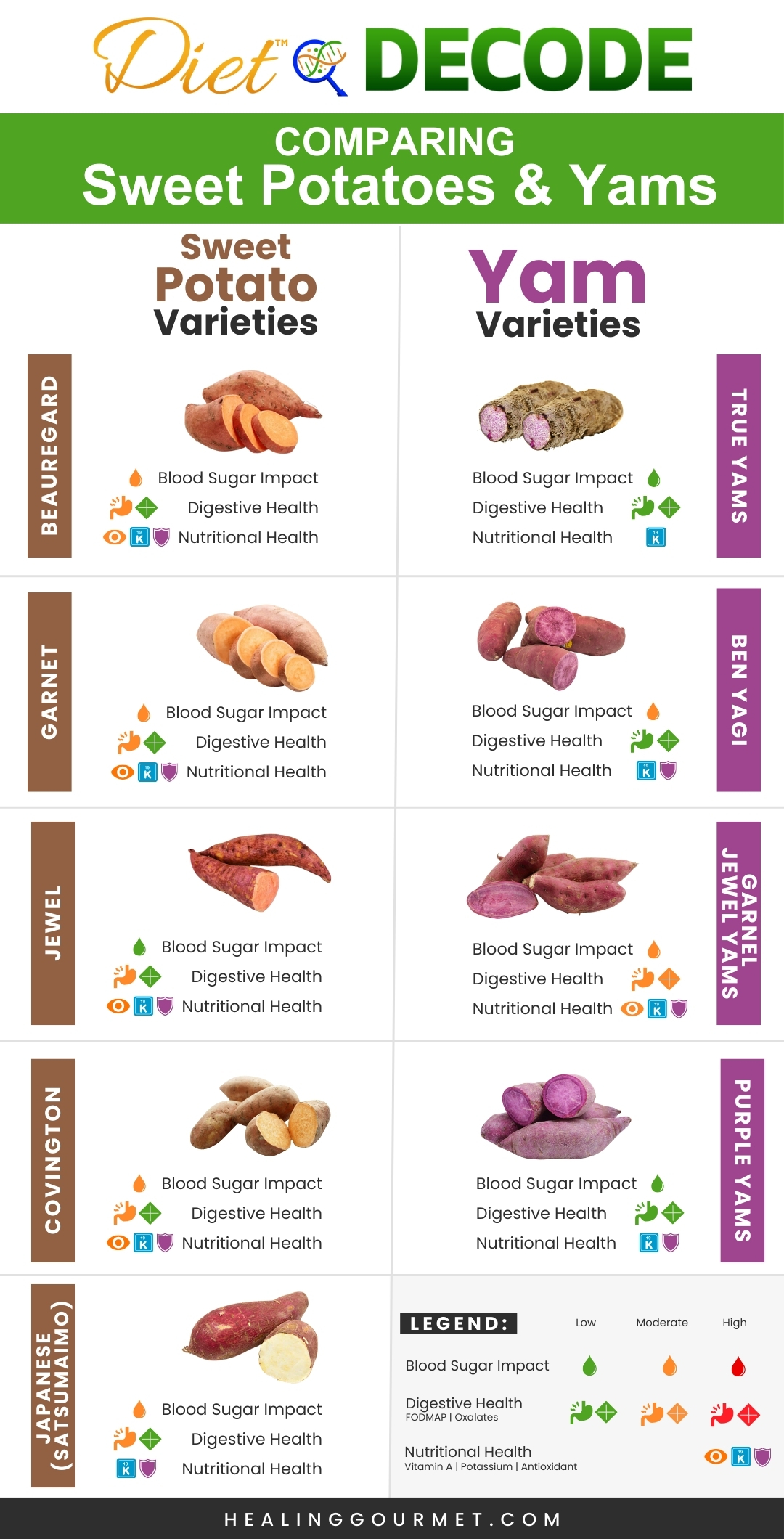
- Beauregard: With smooth, bright orange flesh, this variety is a staple for its mild sweetness and versatility. It holds its shape well when roasted, making it perfect for mashing, baking, and roasting.
- Garnet: Known for its dark red skin and vibrant orange flesh, Garnet sweet potatoes have a rich, deep sweetness. They’re often used in holiday dishes, casseroles, and desserts.
- Jewel: Slightly lighter in color, Jewel sweet potatoes are smooth and creamy, making them ideal for pies, mashing, or roasting.
- Covington: With rich orange flesh that becomes extra sweet and soft when cooked, Covington sweet potatoes are perfect for soups, mashes, or roasting.
- Japanese (Satsumaimo): A unique variety with purple skin and creamy white flesh, this sweet potato has a starchier, denser texture. It’s a go-to in Japanese cuisine, especially for roasting or grilling.
Yams: Flavor and Texture
Yams, on the other hand, are typically starchier and drier than sweet potatoes. Their flavor is a bit less sweet, with a more neutral, earthy taste. True yams (Dioscorea species) come in white, purple, or reddish hues and are often used in hearty stews and savory dishes.
- True Yams (Dioscorea): With dry, starchy flesh and a rough, bark-like skin, true yams are ideal for hearty, tropical dishes, and stews.
- Ben Yagi: A Japanese variety with purple or reddish skin, this yam has a slightly nutty, earthy flavor. It’s commonly used in Japanese soups or grilled dishes.
- Garnel Jewel Yams: While often mistaken for sweet potatoes due to their orange flesh, these yams are starchier and more dense, making them perfect for savory applications like stews and casseroles.
- Purple Yams (Ube): This striking purple yam is sweet and nutty in flavor, making it a popular choice in desserts. Ube is commonly used in Filipino cuisine, particularly for cakes, ice cream, and pastries.
Nutritional Comparison: Sweet Potatoes vs. Yams
Both sweet potatoes and yams are rich in essential vitamins and minerals. However, their sweetness, starch content, and antioxidant levels can vary greatly, making one a better option than the other depending on your specific health goals.
Sweet Potatoes:
Sweet potatoes are a powerhouse of nutrition. Packed with beta-carotene (which your body converts to vitamin A), they support healthy vision, immune function, and skin health. They’re also a rich source of fiber, which supports digestive health, and antioxidants, which help fight oxidative stress and inflammation. With their higher sugar content, sweet potatoes are typically sweeter than yams, providing a quick, natural source of energy.
- High in vitamin A (beta-carotene)
- Rich in fiber and antioxidants
- Generally higher in sugars than yams, making them sweeter and a good source of energy
Yams:
Yams, in contrast, tend to have less sugar but are rich in potassium and manganese, minerals that help support heart health, metabolism, and muscle function. While they may not be as high in antioxidants as sweet potatoes (especially the white-fleshed varieties), they still offer a solid nutritional profile, especially for those looking for a lower-sugar, more starchy option.
- Lower in sugars than sweet potatoes
- High in potassium and manganese
- Typically contain fewer antioxidants than sweet potatoes, particularly in white-fleshed varieties

Personalized Potatoes: Gut Health, Blood Sugar, and Digestive Considerations of Sweet Potatoes and Yams
Choosing the right tuber goes beyond flavor and texture. If you’re looking to optimize your health, especially if you’re managing blood sugar levels or digestive discomfort, understanding how these tubers impact your gut and blood sugar can make all the difference. Here’s how sweet potatoes and yams stack up in terms of digestion and glycemic impact.
Understanding Oxalates: Why Your Gut Bacteria Matter
Oxalates are naturally occurring compounds found in many plant-based foods, and they can cause digestive distress in some individuals. If your gut lacks a certain beneficial bacterium called Oxalobacter formigenes, which breaks down oxalates, you may experience bloating, discomfort, or even kidney stones after consuming high-oxalate foods like yams. Sweet potatoes tend to have lower oxalate levels compared to yams, making them a gentler option for those with oxalate sensitivities or digestive issues.
Quick Tip: If you’re prone to kidney stones or digestive issues, sweet potatoes are generally the safer bet. They’re low in oxalates and easier on your digestive system, whereas yams, especially true yams, contain higher levels of oxalates and may cause discomfort. (1)
The FODMAP Factor: Which Tuber is Gentle on Your Digestive System?
For those suffering from IBS or frequent bloating, FODMAPs (Fermentable Oligo-, Di-, Mono-saccharides and Polyols) are a crucial consideration. These short-chain carbohydrates can be difficult to digest and cause gastrointestinal distress. Sweet potatoes, particularly Satsumaimo (Japanese sweet potatoes), have low FODMAP content, making them a gentler choice for those with sensitive digestion. In contrast, true yams (like Dioscorea species) often have higher FODMAPs, which can lead to bloating and discomfort for those with IBS or other gut sensitivities.
Quick Tip: For those managing IBS or digestive issues, Japanese sweet potatoes (Satsumaimo) are a low FODMAP option that’s both delicious and easy on the gut (2).
The FODMAP Factor: Which Tuber is Gentle on Your Digestive System?
For those suffering from IBS or frequent bloating, FODMAPs (Fermentable Oligo-, Di-, Mono-saccharides and Polyols) are a crucial consideration. These short-chain carbohydrates can be difficult to digest and cause gastrointestinal distress. Sweet potatoes, particularly Satsumaimo (Japanese sweet potatoes), have low FODMAP content, making them a gentler choice for those with sensitive digestion. In contrast, true yams (like Dioscorea species) often have higher FODMAPs, which can lead to bloating and discomfort for those with IBS or other gut sensitivities.
Quick Tip: For those managing IBS or digestive issues, Japanese sweet potatoes (Satsumaimo) are a low FODMAP option that’s both delicious and easy on the gut (2).
The Glycemic Index: Which Tuber is Best for Blood Sugar Management?
The glycemic index (GI) measures how quickly a food raises your blood sugar levels after consumption. If you’re focused on stabilizing blood sugar, some tubers are better than others. Sweet potatoes generally have a higher glycemic index than yams, meaning they can cause a quicker rise in blood sugar. For example, Beauregard and Covington sweet potatoes have moderate to high GIs, depending on how they’re prepared.
On the other hand, Ben Yagi yams, a variety grown in Japan, have one of the lowest glycemic indices among root vegetables, making them an excellent choice for those looking to manage their blood sugar levels more effectively.
Quick Tip: For stable blood sugar, opt for Ben Yagi yams, which have a low glycemic index and a slower digestion process. These yams are perfect for those looking to avoid sharp blood sugar spikes.(3)
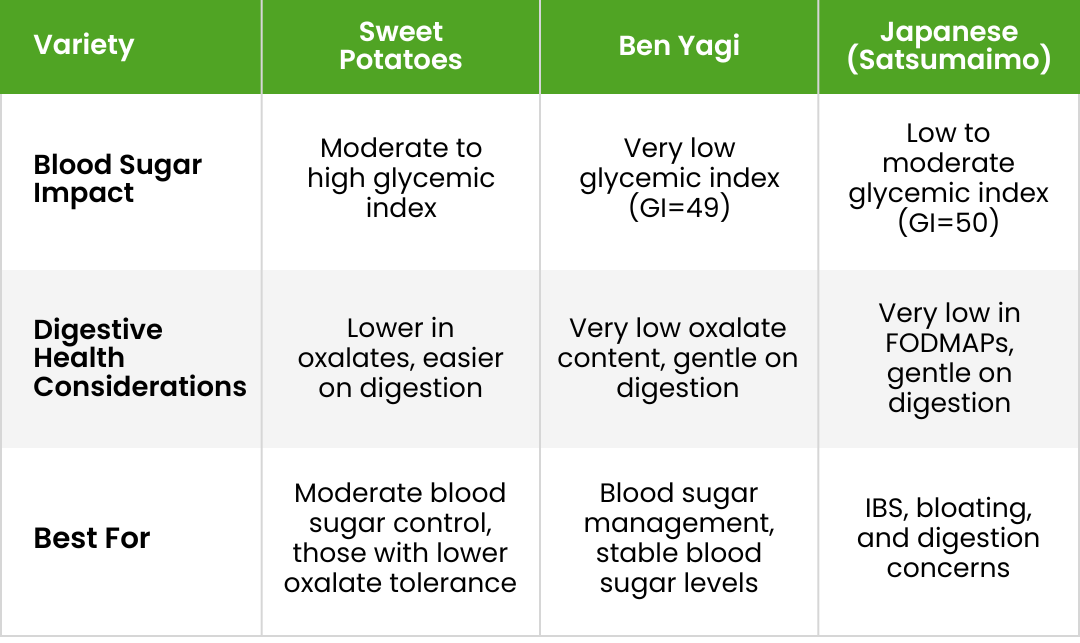
Blood Sugar and Digestive Health Comparison: Sweet Potatoes vs. Yams
Here’s a quick-reference guide to help you choose the right tuber based on blood sugar and digestive health:
Putting It All Together: Personalized Nutrition for Optimal Health
So, how do you choose the right tuber for your unique needs? If you’re focused on digestive comfort, especially with conditions like IBS, Satsumaimo sweet potatoes are your best bet due to their low FODMAP content. If you’re struggling with oxalate sensitivity, sweet potatoes are easier to digest than yams. For those looking to manage blood sugar, Ben Yagi yams are ideal with their low glycemic index, helping to keep your blood sugar levels stable throughout the day.
Ultimately, your choice of sweet potato or yam comes down to your personal health goals. By considering how each type of tuber affects your digestion, blood sugar, and overall well-being, you can make a more informed choice that supports your body’s unique needs.




Leave a Reply