
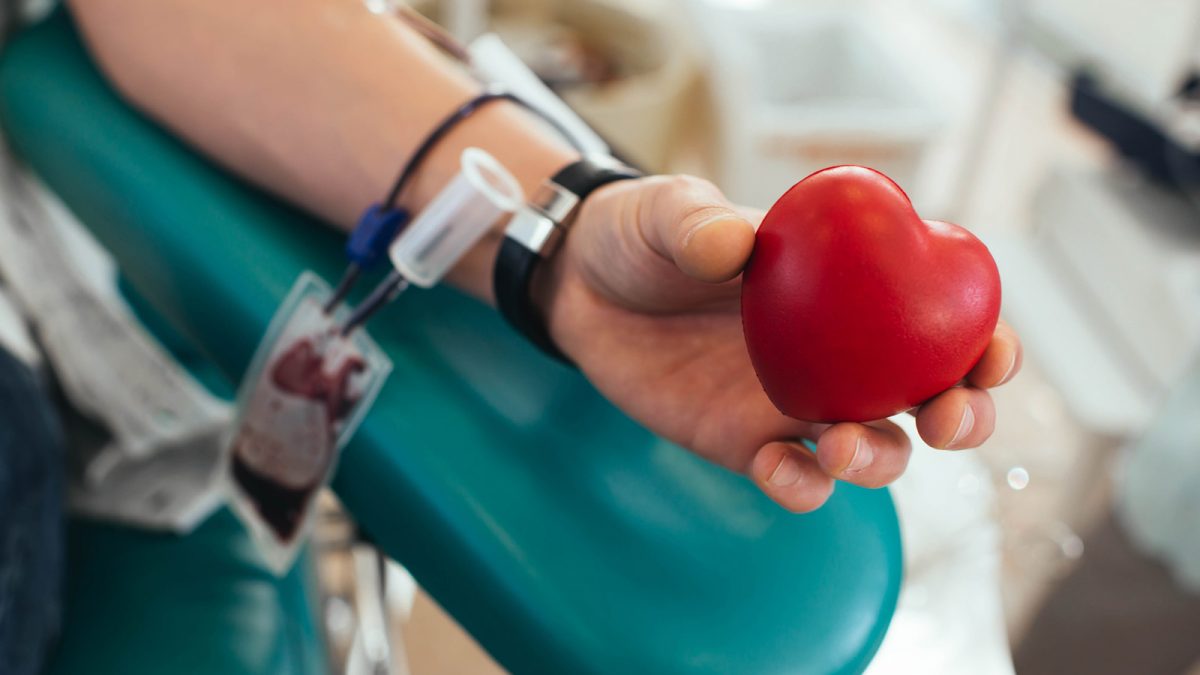

Donate Blood – Slash Heart Attack Risk By 88%!
If you want your car to run longer, you have the change the oil. You don’t have to be an auto mechanic to know that when your oil becomes thick and full of debris, it creates more heat and friction.
But what most of us don’t know is that a very similar process happens inside your body. In fact, new research shows that the “viscosity” of your blood is one of the biggest risk factors for heart disease.
The great news is that preventing it could be as easy as “changing you oil”…
Is Your Heart Pumping Sludge?
Blood viscosity is a measure of how thick and sticky your blood is. It’s the best indicator of your blood’s ability to flow. When blood viscosity is high, it doesn’t flow as easily as it does when the blood is thinner.
Think of it like the difference between tomato juice and tomato paste. As you can imagine, “tomato paste” wouldn’t flow through your cardiovascular system very easily.
As blood gets thicker:
- Your heart has to work harder to circulate your blood
- Less oxygen and nutrients are delivered to your organs and tissues, and
- Blood flow to your extremities is reduced.
But the most damaging aspect of high blood viscosity comes from the friction it creates. Viscous blood is abrasive. It constantly “rubs” the sensitive lining of the arteries, called the endothelium. As this delicate membrane becomes damaged, inflammation and oxidative stress occur. Eventually, dangerous plaques will form as your body attempts to repair the injury.
Until recently, blood viscosity was overlooked as a primary cause of atherosclerosis. But one doctor is helping to wake up patients – and the medical community. Dr. Ralph Holsworth, DO, has compiled more than 1,000 scientific papers linking blood viscosity to cardiovascular disease (CVD).
There’s a common conclusion in many of these studies:
- Those with extensive heart disease have high blood viscosity levels.
- Those with little to no signs of cardiovascular disease have low blood viscosity.
Dr. Holsworth and his colleague, Jonathan V. Wright, MD, believe that this one of the most important (and most overlooked) risk factors for heart disease. Their research was sparked by the work of cardiologist Dr. Kenneth Kensey and fluid dynamics expert Young Cho, whose book, The Origin of Atherosclerosis, asks an important question: Why is atherosclerosis site-specific?
In other words, why do arterial plaques occur in certain parts of the body and very rarely in others? Why do they occur in the large vessels close to the heart and brain… but almost never in the arms?
If heart disease were primarily the result of things like excess blood sugar, cholesterol or homocysteine levels, then arterial damage should occur uniformly throughout the body. But it doesn’t.
Drs. Cho and Kensey state that dangerous lesions in blood vessels occur where the kinetic force of the blood is greatest. The increased turbulence and friction in these locations causes injury to the arterial lining. As the body repairs this damage over and over again, the arteries harden, thicken and plaques form.
And this stress on the arteries is greatly increased when your blood viscosity is high.
Blood Viscosity: The Only Parameter Linked to Every Cardio Risk Factor
According to Drs. Wright and Holsworth,
Increased blood viscosity is the only biological parameter that has been linked with all of the other major cardiovascular risk factors.
For example, as triglycerides increase, so does the thickness of the plasma. Likewise, when inflammatory cytokines increase, the red blood cells clump together more readily. Along the same lines, when blood sugar levels go up, a process called glycation takes place. Glycation directly increases the “stickiness” of the blood.
Donate Blood – Reduce Your Risk of Heart Disease
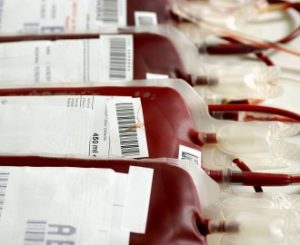
As I mentioned earlier, Dr. Holsworth has compiled more than 1,000 peer reviewed studies and scientific papers that point to the role of blood viscosity in the formation of heart disease.
One of these studies is particularly interesting and offers great hope…
The study, which was published in the American Journal of Epidemiology, followed 2,862 men between the ages of 40 to 60 for a period of nine years. After adjusting for all the usual risk factors, the researchers noted that the men who donated blood on a regular basis reduced their risk of sudden heart attack by 88% (compared to men who never donated blood)!
The authors of the study concluded, “These findings suggest that frequent blood loss through voluntary blood donations may be associated with a reduced risk of acute myocardial infarction in middle-aged men.”
The largest blood viscosity study ever conducted was part of the Edinburgh Artery Study in the 1990s. This study observed 1,592 men and women between 55 and 74 years old. It showed that the 20% of subjects with the highest blood viscosity readings experienced 55% of the major cardiovascular events. By contrast, the 20% of subjects with the lowest blood viscosity experienced just 4% of the cardiovascular events.
Blood viscosity also appears to explain why heart attacks and strokes are very rare in menstruating women. Younger women generally have lower blood viscosity levels, because they lose blood on a monthly basis. However, within only a few years after menstruation stops, the heart attack and stroke risk for women is just as high as it is for men.
Not Just Your Heart is at Risk
As you might imagine, thick and sticky blood is not just a risk factor for heart attacks and stroke.
It has also been shown to be a major risk factor for diabetes, mental decline, gout, cirrhosis, Raynaud’s syndrome and autoimmune conditions like rheumatoid arthritis.
The tiny blood vessels in the eyes are also particularly vulnerable. In fact, Dr. Kenneth Kensey, a prominent researcher in the field, has suggested that virtually all degenerative eye problems – including macular degeneration and glaucoma – can be traced to elevated blood viscosity.
How Can You Reduce Your Blood Viscosity
The great news is that high blood viscosity levels can be reduced safely and easily. The two most effective ways for you to reduce your blood viscosity are:
Donate Blood
Not only could you potentially lower your own risk of heart attack and stroke by more than 80%… you could also save the life of someone else. Unless you are a menstruating woman, consider donating blood or scheduling a therapeutic phlebotomy two to four times per year.
Take a Fish Oil Supplement
Dozens of research studies have shown that taking a high quality fish oil supplement (we recommend Carlson’s) can reduce blood viscosity and enable the blood to flow more freely. This is in addition to the numerous other cardiovascular and health benefits of omega-3 fatty acids. (Note: If you are already taking a blood-thinning medication, check with your doctor before taking a fish oil supplement.)
You may also wish to consider hawthorn extract, nattokinase and vitamin E (make sure your vitamin E contains “mixed tocopherols and tocotrienols”). All three of these supplements have also been shown to reduce the thickness of the blood.
By taking these safe and natural measures to reduce blood viscosity, you can dramatically reduce mechanical stress to the lining of your arteries… and virtually eliminate what could be the most important primary cause of heart disease.
How Can You Test Your Blood Viscosity?
If you have existing cardiovascular problems or feel that you may already have a high risk for heart disease and stroke, consider having your blood viscosity measured.
This will help provide you evaluate the health of your cardiovascular system. It can also set an important benchmark as you work to lower your risk factors.
It’s important to note that blood viscosity must be measured at peak-systole (when blood is moving the fastest and is thinner) and at end-diastole (when blood moves slowly and red blood cells aggregate). Until very recently, a test of this nature did not even exist.
However, Meridian Valley Laboratories now offers a testing service called The Whole Blood Viscosity Profile. It provides the most accurate and complete measurement of blood viscosity available anywhere and can help anyone to determine their risk for heart disease and track the effectiveness of treatment. And you don’t have to visit their facility in Washington state. You can simply have your doctor or another testing facility send a sample of your blood. You can reach the lab via its website (http://www.meridianvalleylab.com) or by calling 425-271-8689.




Leave a Reply