

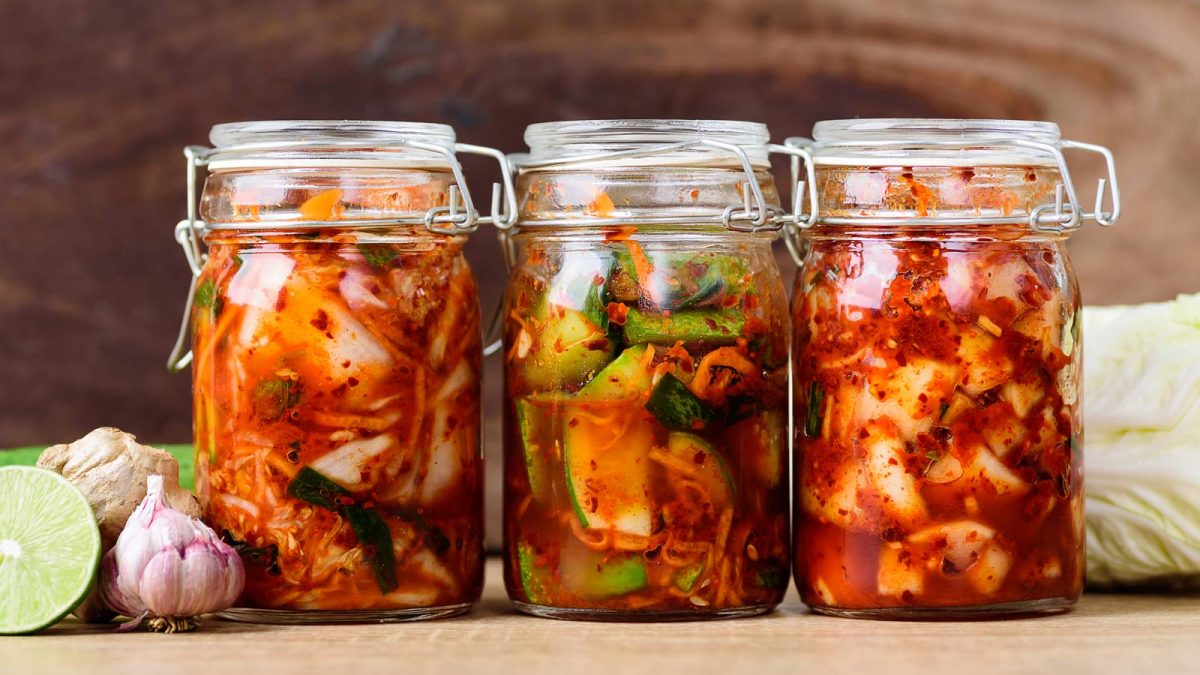
When Fermented Foods and Probiotics Hurt
Drink Kombucha. Eat sauerkraut. And don’t forget to take your probiotics!
For years we’ve heard that eating lacto-fermented foods and taking probiotic supplements is the way to better gut health.
But is this good advice? Or could it be a recipe for migraines, insomnia, sinus problems and anxiety?
In today’s article, we delve into the science behind histamines, how your genes impact your reactivity to these compounds, and the probiotics you should (and shouldn’t) take if you struggle with histamine issues.
Histamine Intolerance 101
The first thing that might come to mind when you hear the word ‘histamine’ is the runny nose and watery eyes that go along with seasonal allergies.
However, the histamine molecule does more than just make you miserable when pollen levels rise. Histamine is a neurotransmitter in the brain. It is part of your immune response to pathogens. It is a vasodilator that expands blood vessels and a signaling molecule involved in releasing stomach acid.
And not only does your body make histamine for a variety of purposes; it is also found in certain foods and produced by bacteria in our intestines.
With such a wide variety of important roles, it is no surprise that too much histamine can cause an array of different reactions. The term “histamine intolerance” refers to reactions you may experience to the histamine contained in foods.
Some of the symptoms of histamine intolerance include (but are not limited to):
- Itching and hives
- Sinus drainage and inflamed airways
- Stomach pain, diarrhea, nausea, and heartburn
- Migraines or headaches
- Problems sleeping, anxiety, irritability
- Arrhythmia
- Interstitial cystitis
And as with any health and dietary issues it is important to remember that we are all unique. Too much histamine can cause very different responses among individuals. Some may experience gastrointestinal symptoms with nausea, diarrhea, and heartburn. Others may tend toward hives, itchiness and sinus drainage. Migraines may plague others. And for some histamine intolerance manifests as anxiety, sleeplessness, or irritability.
The combination of these seemingly unrelated problems makes it difficult to connect the dots and a challenge to diagnose histamine intolerance.
But there’s an easy way to see if you might be predisposed to histamine intolerance: Your genes.
The Genetic Origins of Histamine Intolerance
Not only does your body produce histamine, it also breaks it down via two specific enzymes.
The diamine oxidase (DAO) enzyme is produced in your intestines to break down histamine from food and your gut microbiome. Inside your cells and tissues, elevated histamine is broken down by the enzyme histamine N-methyltransferase (HNMT).
And this is where each of us is unique and where our personal genetics comes into play.
People with certain variants in the AOC1 gene, produce less of the diamine oxidase enzyme. These people are therefore at higher risk for reacting to histamine from food.
Genetic variations also influence your production of the HNMT enzyme. And people who produce less of this enzyme are also at risk for high histamine levels.1
So while some people may be able to eat high-histamine foods frequently with no reaction at all, if you carry the genetic variants that decrease your ability to metabolize these compounds, you may have strong reactions to the very same meals.
Diet and Supplement Considerations with Histamine Intolerance
If you suspect you may have an issue with histamines, I encourage you check out my previous article with a list of high histamine foods here. Keep a food journal and note any reactions you might have to these foods.
If you do experience reactions, you might want to order a genetic test like 23andMe to help determine if there is a genetic component.
Now let’s discuss probiotics…
Probiotics can be a double-edged sword when dealing with histamine intolerance. Certain probiotic strains can increase histamine levels in the gut… while other strains can decrease your body’s histamine activation.
For example, certain strains of the probiotic Lactobacillus reuteri have been shown to convert the amino acid histidine (an amino acid found in protein-rich foods) into histamine. For some people, this could be a benefit and reduce colitis. But for people with histamine intolerance, it may increase histamine levels and actually cause health issues.2
Some of the bacteria that may improve symptoms of histamine intolerance include:
- Lactobacillus sakei (strains AGR46, AGR37, Lb706) breaks down circulating histamine.3
- Lactobacillus rhamnosus reduces histamine produced by immune cells in the gut.4
- Bifidobacterium infantitis and Bifidobacterium longum can decrease conversion of l-histidine to histamine.5
- Lactobacillus GG has been shown to inhibit mast cell activation, reducing histamine levels.6
There are also several manufacturers making specific probiotic blends that are marketed for people with histamine intolerance.
References (6)
- Laura Maintz, Natalija Novak; Histamine and histamine intolerance, The American Journal of Clinical Nutrition, Volume 85, Issue 5, 1 May 2007, Pages 1185–1196, https://doi.org/10.1093/ajcn/85.5.1185 (PubMed)
- Gao, C., Major, A., Rendon, D., Lugo, M., Jackson, V., Shi, Z., … Versalovic, J. (2015). Histamine H2 Receptor-Mediated Suppression of Intestinal Inflammation by Probiotic Lactobacillus reuteri. mBio, 6(6), e01358–15. http://doi.org/10.1128/mBio.01358-15 (PubMed)
- Naila A, Flint S, Fletcher GC, Bremer P, Meerdink G (2012) Histamine Degradation by Diamine Oxidase, Lactobacillus and Vergibacillus halodonitrificans Nai18. J Food Process Technol 3:158. doi:10.4172/2157-7110.1000158
- Oksaharju A, Kankainen M, Kekkonen RA, Lindstedt KA, Kovanen PT, Korpela R, Miettinen M. Probiotic Lactobacillus rhamnosus downregulates FCER1 and HRH4 expression in human mast cells. World J Gastroenterol 2011; 17(6): 750-759 (PubMed)
- Dev, S. et al (2008). Suppression of Histamine Signaling by Probiotic Lac-B: a Possible Mechanism of Its Anti-allergic Effect. Journal of Pharmacological Sciences, 107(2), 159-166. https://doi.org/10.1254/jphs.08028FP (PubMed)
- Harata, G., He, F., Takahashi, K., Hosono, A., Miyazawa, K., Yoda, K., … Kaminogawa, S. (2016). Human Lactobacillus Strains from the Intestine can Suppress IgE-Mediated Degranulation of Rat Basophilic Leukaemia (RBL-2H3) Cells. Microorganisms, 4(4), 40. http://doi.org/10.3390/microorganisms4040040 (PubMed)

What about yeasts in kombucha and kefir, etc.? I have spent months drinking buch and kefir, thinking I was helping. Then my alternative doctor suggested that I have a yeast overgrowth. Do all lacto-fermented foods have naturally occurring yeasts? Thank you for your answer.
Hello Anya,
Yes, all lacto fermented foods contain a variety of yeast species. You can read the back of a kombucha bottle and see the specific strains there.
Keep in mind, in the microbial world, there is competition. So Saccharomyces boulardii (one of the primary yeast strains in kombucha) competes with Candida albicans.
However, many people experience crossover reactions to different yeast strains, as well as experience histamine reactions from different probiotics.
If you are unsure of how it is affecting you, it would be worth a dietary trial to see how you feel with/without these kinds of foods. For me, removing the ferments was a big help.
Be Well,
Kelley