
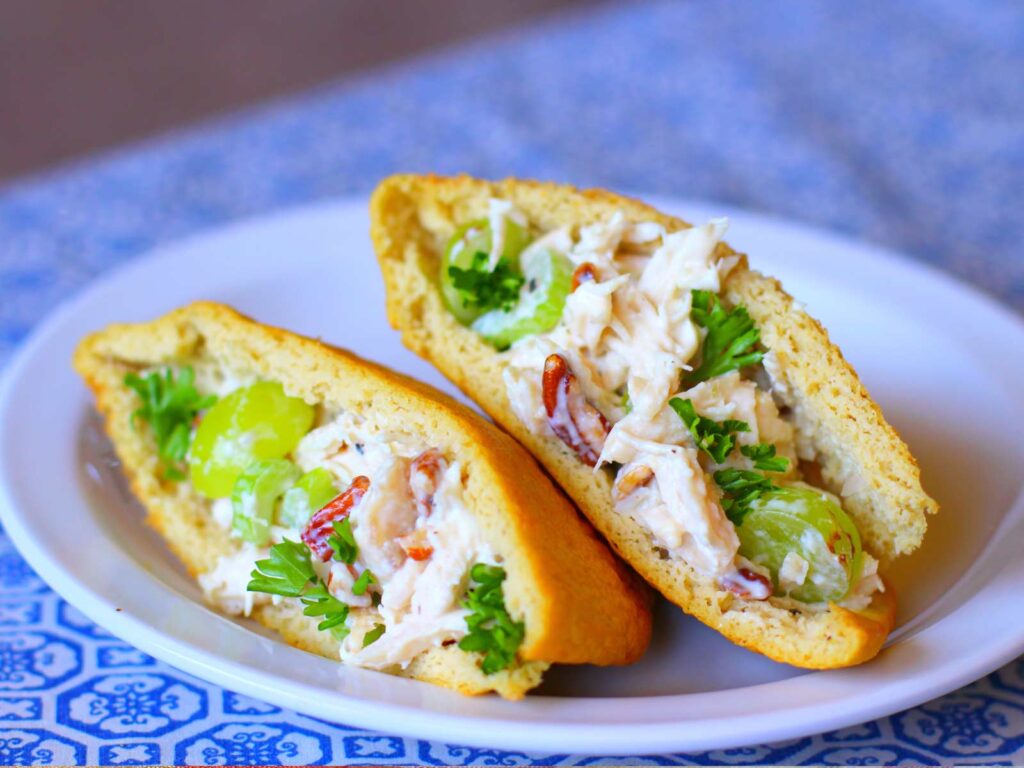
Traditional breads – like pita – are more than just a part of a meal. These loaves and rounds have graced tables for millennia, both for sustenance and as a representation of community.
The pita pocket is a prime example of an ancient grain recipe carried down to the modern world. Since it didn’t require much time in the oven, the pita and its variations were an ideal form of quick bread. And they still are!
Pita Bread: The Tastiest Eating Utensil
Their slightly leavened characteristics make it a perfect tool at most any table. Pita can be used to scoop up food or conveniently hold your favorite ingredients.
Since most of us are not turning to our own coals to fire this flatbread, we opt for the store-bought options. But unfortunately, these rounds are no longer made with the wheat of 2500 B.C. Even “whole wheat” pita is typically sourced from genetically modified wheat that has been engineered to have higher yield, and more gluten to provide the texture that we’ve become so accustomed to. Not to mention, an assortment of additives, dough conditioners and shelf-life extenders.
Not the Pita We’re Meant to Eat
As we’ve discussed throughout the Healing Gourmet site, wheat causes inflammation in the body that we may or may not recognize. Bloating after a meal is an obvious reaction, but many of us experience the effects of wheat in delayed reactions that take as much as 72 hours to manifest. Fatigue, brain fog, ADHD, and nutrient deficiencies are just a few of the symptoms that can be caused by wheat.
What’s more, excessive consumption of wheat-based products can lead to weight gain and increase the risk for metabolic issues. When your day revolves around carb-heavy foods like cereal, sandwiches and pasta, it’s easy to rack up the carbohydrates without working them off. Pita is one of those breads that not only accompanies a meal…it is the foundation on which it’s built! You might end up eating three in one sitting just to get the last bit of baba ganoush!
Paleo Pita Bread: A Grain-Free Solution
The problem is that even knowing all this, pita bread is still so hard to resist. Whether served warm for dipping… or at room temperature stuffed with your favorite filling, the pita is a unique culinary vehicle for a myriad of delicious experiences. We love the many uses for this age-old bread and wanted to find a gluten-and-grain-free solution. In order to recreate the chewy pocket bread, we turned to a mix of coconut and almond flour, with a small amount of psyllium husk for optimal pliability.
Almond flour not only mimics the heartiness of the original whole wheat, it provides important nutrients like vitamin E and magnesium. Just the slightest bit of coconut flour provides the firm structure that traditional pita embodies.
Aside from the healthy ingredient swap, the second major difference between preparing a classic pita and making our low-carb version is the time involved. In fact, traditional pita takes hours to prepare. Yes, hours. Unlike other bread, pita needs a good bit of love and care prior to being rolled out for baking.
But not our Paleo pita bread! Once the simple ingredients are mixed, your Paleo pita bread dough is ready to be baked. No waiting for rise, no kneading and shaping – simply scoop the thick batter and pop them in the oven at 350. In less than 20 minutes, you’ll have fresh pita perfect for some Paleo hummus!
Since our Paleo pita bread is low-carb and made with nutrient-dense, real food ingredients, you don’t have to feel guilty about eating more than one. Enjoy them with other Mediterranean classics like our Paleo Tabouli or delicious jarred Divina’s Olive Spread.
These soft and flexible pitas are perfect for stuffing with your favorite protein-rich salad for a healthy hand-held lunch. If you’re making these for the week ahead, be sure to add the psyllium to help keep the pitas moist and pliable.
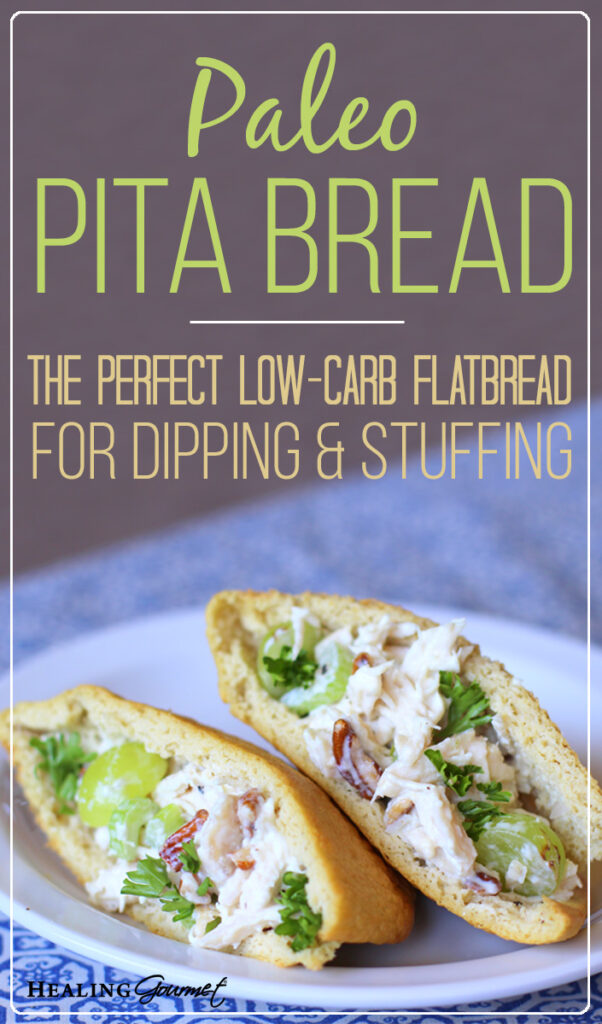
Low Carb Paleo Pita Bread
Ingredients
Tap an ingredient to check it off.
DRY INGREDIENTS
- ¼ cup almond flour, firmly packed (35 g)
- 1 Tbsp. coconut flour, firmly packed (14 g)
- ⅛ tsp. baking soda
- ⅛ tsp. sea salt
- 1 tsp. organic psyllium husk powder (3 g) Optional, but increases pliability and reduces breakage)
WET INGREDIENTS
- ¼ cup hot water
- 1 pastured egg
- 1 Tbsp. organic extra virgin olive oil or avocado oil
Instructions
- Preheat oven to 35O F. Prepare a baking sheet with parchment.
- In a small bowl, combine the dry ingredients.
- In a medium bowl, combine the wet ingredients, whisking well.
- Add dry ingredients to wet and mix using a wooden spoon to form a thick batter.
- Use a ladle to scoop batter by ¼ cupfuls and pour onto parchment-lined pan in circles. Make the batter about the thickness of a pancake and the diameter you want it – it will not spread much.
- Transfer to oven and bake 17-19 minutes.
- Let cool on a wire rack, then cut each circle in half and slice a slit to make a pocket.
- Store cooled pitas in an airtight container.
Nutrition Facts
Per serving · Recipe makes 4- Fat8 g81%
- Protein3 g14%
- Carbs3 g5%
- Calories
- 92
- Total Fat
- 8 g
- Saturated Fat
- 1 g
- Monounsaturated Fat
- 5 g
- Polyunsaturated Fat
- 1 g
- Cholesterol
- 53 mg
- Sodium
- 161 mg
- Total Carbohydrates
- 3 g
- Dietary Fiber
- 2 g
- Sugar
- 0 g
- Net Carbs
- 1 g
- Protein
- 3 g
Rediscover the Joy of Baking — Without the Carbs
If you enjoyed this recipe, don’t miss our best-selling books — Keto Breads and Keto Desserts — now available together in our Ultimate Baking Bundle!
Inside, you’ll find over 100 grain-free, low-carb recipes that taste just like the real thing — from fluffy burger buns and buttery biscuits to indulgent cakes, cookies, and more. Most recipes take just 15 minutes of prep or less. Don’t delay, put your favorite breads & desserts back on the table today!

Why You Should Quit Bread — Even the "Healthy" Kind
Did you know that traditional grain-based breads & desserts contain a compound that is the #1 greatest danger in your diet?
Studies show that this compound (and I am not talking about "gluten") is toxic to your heart and blood vessels, weakens your immune defenses, and disrupts your nerves and brain function.
And if that's not enough… this hidden compound also makes it nearly IMPOSSIBLE to burn fat and lose weight!
The great news is that you can still have your breads and desserts… AND be well too!
Discover the Secret to the World's Healthiest BreadThis post may contain affiliate links. Click here to read my affiliate policy.

About the author
Kelley Herring
Kelley Herring, founder of Healing Gourmet, is a natural nutrition enthusiast with a background in biochemistry. Her passion is educating on how foods promote health and protect against disease and creating simple and delicious recipes for vibrant health and enjoyment.

Hi, made your Pita pockets. your directions state you should ladle 1/4 cup batter for 4 pockets. My batter was thick so ladlecwas not necessary, and ingredients only made about 3/4 cup. i made 4 equal balls and flattened them using a second piece of parchment. they did not puff up sufficiently to actually slice into pockets. what am i missing?
Hi Terri,
It should be batter – like a thick pancake batter. You say “balls” and “flattened”. That indicates you have not weighed your flours and likely have used too much coconut flour. When made correctly, as described in the instructions, you will ladle the batter, it will spread while baking, and you will get the results pictured.
No flattening is required and this indicates incorrect ratio of ingredients.
Kelley
Hi Kelly, I made your recipe today but it didn’t come out well and I am hoping you can help. The words “batter” and “ladle” in the recipe implies that the mixture is pourable. Despite using the ingredients to the gram my mixture was like a soft dough. I shaped it on the baking parchment with my hands but it did not rise at all. Obviously I must be doing something wrong. The flour I used was fine almond flour, not almond meal. Can you help please?
Hi Richard,
You are right – it definitely should not be a “dough”, it is more the consistency of grits or thick pancake batter. Pitas don’t really rise – they are a flatbread.
Sounds like you had too much coconut flour… or not enough liquid. Did you forget the hot water or oil? Did you use a small egg instead of standard large? You say you weighed your ingredients – the recipe I provide here with to-the-gram measurements produces the results pictured.
Usually when someone has drastically different results, something was left out (happens to me!). I like to have my recipe and cross everything off as I go to ensure I didn’t leave something out.
Hope this helps.
Kelley
Wow! I often make baba ganoush and a ketofied type of muhammara. My only frustration has been not having pita for it. You solved my dilemma. This was a simple and fast recipe. Most importantly it tasted awesome and they PERFECTLY hulled out after slicing in half and running a knife inside, and great texture (I was pretty blown away). I had a wonderful meal today because of this recipe and when only eating keto OMAD it really is important that a recipe works the first time.
I can’t wait to try my gyros meatballs in them and I might even sneak these into my favorite Middle Eastern restaurant here in town that I love but has homemade pitas that is nearly impossible to resist. This will do it though! Thank you!
So glad you enjoyed them, Sarah! I find them to be really close to the original, too. Cheers!
Made these to serve with falafels by Tori Avey
The pitas were so light and went great with the
falafels and a kale salad.
So glad to hear it!
Hi! I am about to put these in the oven, just to discover that I’m out of parchment paper! Will it work with greased baking sheet?
It might stick! Parchment is the best for this recipe.
I don’t have psyllium husk powder do you think ground flax seed will be a good substitute ?
Hi Jennifer,
It could work – flax is not as thirsty as psyllium, so keep that in mind.
Can I substitute Redmill Paleo flour for this recipe? It has Almond flour, arrowroot, organic coconut flour, tapioca flour.
Hi Connie,
Not if you want to get the results pictured. Grain-free flours are not interchangeable and produce very different results.
What is the texture of this recipe?
Pita!
These are great! I doubled the recipe, added a tsp of garlic powder and 2 tsp of Lakanto monk fruit sweetner, split them and cut them into triangles then served them with baba ganoush. My family loved it. Thank you for this recipe!
Hi Caroline!
I’m so glad you enjoyed them. And thank you for taking the time to leave a comment.
Happy Holidays,
Kelley
I plan on trying this recipe, as directed, as soon as I remember to buy more eggs.
We raise our own chickens and I have not had to buy eggs in years. But the girls are aging and slowing down and now it will be spring before I can use eggs from my own girls.
I am flabbergasted at how often people want YOU to change the recipe for them. Do they not realize how all time encompassing, developing a recipe can be? And you do it for free? I always try to make a new recipe exactly as posted. If it does not suit me, then fine, it is up to me to figure out how to change it to make it work. Thanks for being kind and patient with your followers
Hi Ann,
How wonderful that you have your own chickens – that’s something I’m looking forward to doing soon myself. Do you have a favorite breed?
Thank you for your kind words and the validation. Recipe development – especially with non-traditional ingredients can be a big challenge. So thank you for seeing that and also for being an accountable cook who takes responsibility for your own recipe modifications. I’ve had readers not follow the recipe as written, change significant ingredients… and then get upset with me for the results. I try to focus on the positive comments…and ignore the negativity. Some days that is easier than others 🙂
Be Well,
Kelley