
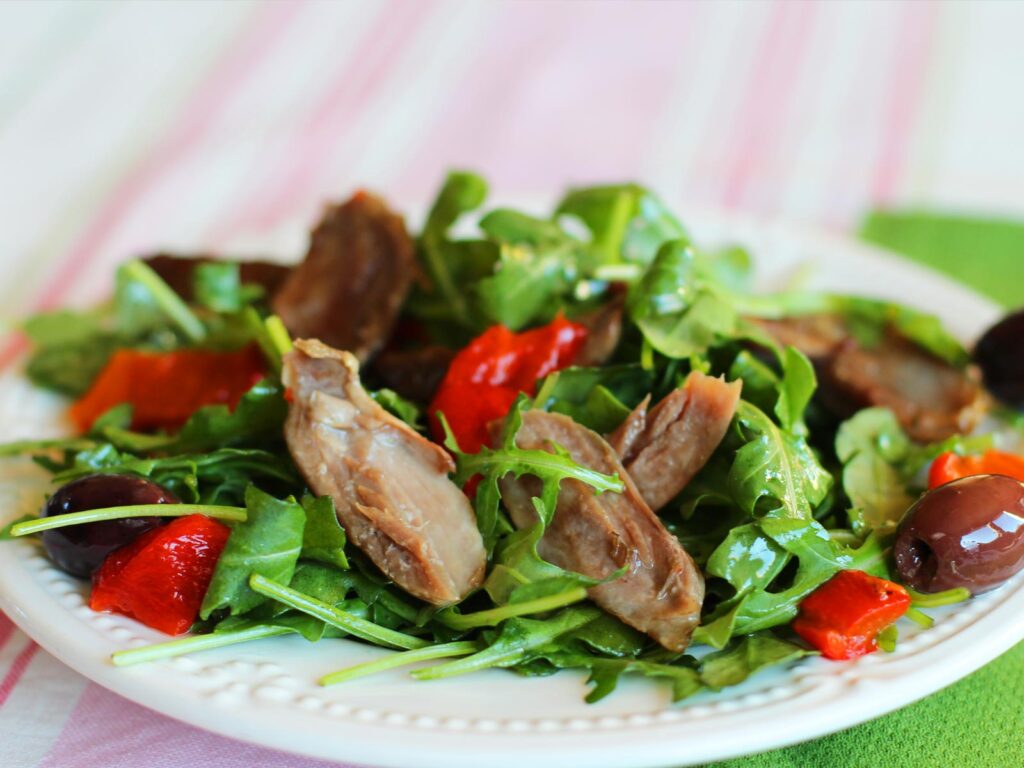
Looking for a super-simple duck confit recipe? You’ve come to the right place.
If you’re familiar with duck confit (pronounced con-FEET), you already know that it practically melts in your mouth, is loaded with flavor, and can elevate even the most urbane dishes to gourmet status.
But duck confit doesn’t just taste great – it can also be a health-promoting dish that is rich in belly-flattening, disease-fighting monounsaturated fats.
And because it is cooked “low and slow” and kept moist throughout the process, there is little concern for generating harmful cooking byproducts like lipid oxidation products (LOPs) and heterocyclic amines (HCAs) that can damage our DNA and cells.
And here’s the best part…
Despite its fancy reputation and legendary gourmet tradition, duck confit is very easy to make at home with just a few ingredients and minimal prep time. In fact, the hardest part about making duck confit is waiting until the dish is done.
Below, you’ll find a simple step-by-step recipe. But first, I want to share a little history on this treasure from the south of France and the culinary preservation method that’s making a comeback…
What is Duck Confit?
The word “confit” translates to “preserved” in French. It is an old-world technique, traditionally used for preserving duck, pork and goose.
But it is not the slow cooking that’s responsible for confit’s long shelf life – it’s the salt. Salt prevents the growth of microorganisms by drawing water out of microbial cells through osmosis. (You need a concentration of about 20% to kill most harmful species). The amount of fat covering the confit during storage also reduces spoilage, by preventing air from coming into contact with the meat.
Confit that is properly prepared will keep in the refrigerator for up to six months. But you’ll find so many ways to enjoy it, it’ll be gone much sooner than that!
Now that you know a little bit of the history, let’s get started with the easy preparation…
Duck Confit Recipe: The Easy Step-By-Step
The first (and most important step) is choosing the healthiest ingredients.
Most duck is factory-farmed, given routine antibiotics and growth hormones, crammed into tight, inhumane quarters and often force-fed to create fatty livers for foie gras production. For these reasons, we highly recommend that you avoid conventionally-raised duck.
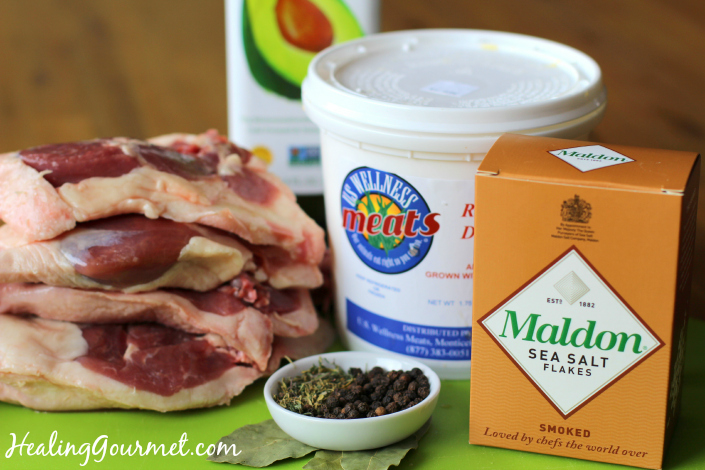
We prefer using Pastured duck legs and duck fat from US Wellness Meats, sourced from free-range Pekin Ducks, fed a non-gmo diet, free of growth hormones and antibiotics.
The traditional method of preparing confit involves using pure duck fat to cook the legs. I like to make this delicacy a bit more affordable (and pack in more monounsaturated fats) by using a 50:50 blend of duck fat and avocado oil. You will still enjoy the rich flavor at about half the cost (I use Olivado for this recipe, but we also love Ava Jane’s unrefined avocado oil).
Once you have finished making your duck confit, you’ll have a nice supply of “duck-a-cado” oil that is safe to use at medium to high temperatures and is great for sautéing veggies, drizzling over roasted winter squash and root veggies, and of course, searing meats.
Onto the next key ingredient: salt. I use a combination of mineral-rich Real Salt and Smoked Maldon. I find this combination gives the confit a pleasant slightly “smoky” taste.
And finally, the aromatics… you’ll also need some bay leaves, thyme and black peppercorns.
Here’s a photo of everything you’ll need for your duck confit:
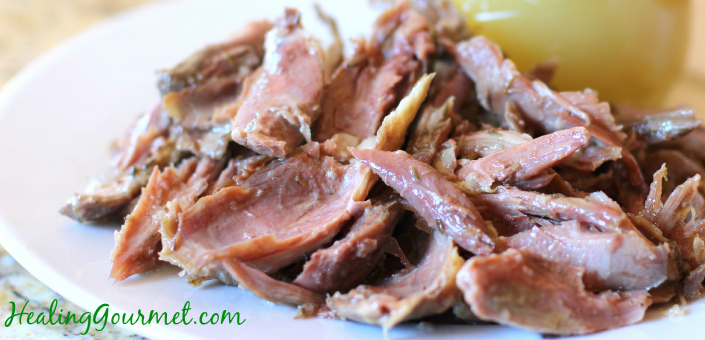
… and here’s what it will look like when its done…
Duck Confit Recipe

Ingredients
Tap an ingredient to check it off.
- 6 free range duck legs (about 3 lbs.)
- 2 cups free range duck fat
- 2 cups avocado oil
- 6 sprigs fresh thyme, stripped
- 3 bay leaves, crushed
- 1 Tbsp. peppercorns, crushed
- 1/4 cup salt (Real Salt and/or Smoked Maldon, preferred)
Instructions
- First, rinse the duck legs and then pat dry. Combine the salts and aromatics. Add the duck legs to a large zip-top bag and pour in the salt mixture. Rub the legs to coat.
- Transfer to the refrigerator to cure for 24-36 hours.
- Remove duck legs from curing in the refrigerator. Rinse and pat dry. Then add the legs to a slow cooker or slow-cooker / pressure cooker hybrid. I use the Instant Pot for its versatility and safe, stainless steel interior.
- Now, melt the duck fat and add the avocado oil. Add the melted oil to the duck legs until they are completely covered. Turn on the slow-cook function and cook for six hours on low.
- Let the vessel cool slightly, then separate duck meat from oil and pull or chop the meat into small chunks. Now, you can now put your duck confit into mason jars and use a safe canning method for long term storage. Or simply pack the meat in jars and then cover completely with the fat. This will remain good in the refrigerator for up to several months, but it’s probably best to enjoy it within a few weeks.
Nutrition Facts
Per Serving · Recipe makes 6- Fat16 g54%
- Protein30 g45%
- Carbs1 g1%
- Calories
- 278
- Total Fat
- 16 g
- Saturated Fat
- 4 g
- Monounsaturated Fat
- 8 g
- Polyunsaturated Fat
- 3 g
- Cholesterol
- 133 mg
- Sodium
- 997 mg
- Total Carbohydrates
- 1 g
- Dietary Fiber
- 0.1 g
- Sugar
- 0 g
- Net Carbs
- 1 g
- Protein
- 30 g
How to Enjoy Your Duck Confit Recipe
There are unlimited ways to enjoy this gourmet treat. I especially enjoy melting duck confit until it is warm and then pouring the meat and fat mixture over a fresh salad. I also like to serve it as a starter at dinner parties, where it has always been a hit.
But one thing is for sure, once you taste that first bite, I think you’ll agree that this is one dish that you will want to enjoy this duck confit recipe over and over again.
Have you ever made duck confit? If so, what ingredients and preparation did you use and how did it turn out?

Why You Should Quit Bread — Even the "Healthy" Kind
Did you know that traditional grain-based breads & desserts contain a compound that is the #1 greatest danger in your diet?
Studies show that this compound (and I am not talking about "gluten") is toxic to your heart and blood vessels, weakens your immune defenses, and disrupts your nerves and brain function.
And if that's not enough… this hidden compound also makes it nearly IMPOSSIBLE to burn fat and lose weight!
The great news is that you can still have your breads and desserts… AND be well too!
Discover the Secret to the World's Healthiest BreadThis post may contain affiliate links. Click here to read my affiliate policy.

About the author
Kelley Herring
Kelley Herring, founder of Healing Gourmet, is a natural nutrition enthusiast with a background in biochemistry. Her passion is educating on how foods promote health and protect against disease and creating simple and delicious recipes for vibrant health and enjoyment.






What’s gonna happen if I let it cure in salt longer …. I’m trying with a full duck ????
Is 3days too long?
This is my first year raising my own Muscovies and I will try this recipe when mine are processed. Can you use pork fat – either bacon or from ham roast, in addition to duck fat? I realize pork fat is not as healthy but we also raise our own berkshire pork and I like to use what I raise.
Can I also recommend that instead of buying duck from an online retailer, try your local farms? Buying local helps build demand for small scale, sustainable, healthy and ethical farming. Buying online still fosters large scale farm operations, and even ‘free range’ can be done on a factory scale an in conditions that you would not want to support. Support your local small scale farmers, and when possible, raise your own! Try local buy and sell sites, Facebook and farm markets to source your meats. Ask if you don’t see it as demand will increase supply if the farmer knows it will sell.
Hi Adriana!
You raise Berkshire pork and Muscovy duck? Can I come over for dinner? 🙂
You can certainly use pork fat in this recipe. And I think you might be surprised at the health benefits of lard. Most people don’t realize it is primarily a monounsaturated fat, like olive oil.
And I absolutely agree with you to buy local whenever possible, and to get to know your farmer. Of course, for many people living in cities this is not possible (nor is raising your own!).
Be Well,
Kelley