

When it comes to modern day epidemics, “chronic diseases” like cancer, heart disease and diabetes take the spotlight – for good reason. These preventable illnesses are leading causes of death worldwide.
But there is another epidemic, which causes untold suffering for millions of people. And it doesn’t get the attention it deserves. I’m talking about the “Syndrome Epidemic”…
A syndrome is defined as, “a group of symptoms that consistently occur together.” As the definition indicates, a syndrome is not a true diagnosis. In fact, it is actually an admission that doctors have no idea what is really wrong with you… so they create a label for a group of symptoms.
For example, consider “Chronic Fatigue Syndrome.” It might as well be called “You’re Always Extremely Tired & Your Body Aches Disease.” Or consider “Irritable Bowel Syndrome”, otherwise known as “You Have Bloating, Gas & Diarrhea (or Constipation) and We Don’t Know Why Disease.”
Of course, hand in hand with the syndrome epidemic are autoimmune disorders. According to the National Institutes of Health, over 23 million people in the United States alone are diagnosed with autoimmune disease (while millions more suffer undiagnosed).
What are the Symptoms of the “Syndrome Epidemic”?
The constellation of symptoms we’re talking about include everything from chronic pain, fatigue and weakness… arthritis and painful, swollen joints… psoriasis, hives and rashes… migraines… chronic sinus problems… hair loss… cold intolerance… brain fog, anxiety and depression… and of course a range of painful and embarrassing digestive troubles.
With such a wide range of ailments – and the fact that many people present all of these symptoms at once – it’s no surprise conventional medicine has few answers for this growing epidemic. Most doctors prescribe a basket of prescription drugs, each one aimed at suppressing a particular group of symptoms.
This approach rarely works. And it often makes things worse, as a host of side effects blend in with the already debilitating symptoms.
Some people find great benefit by switching to the meat-and-vegetables diet of our Paleolithic ancestors. This is especially true for those who were previously on a typical diet, including grains, sugar and a variety of processed foods. However, there are many people whose symptoms do not improve on a traditional Paleo Diet.
But there is a very controversial diet that is growing more popular by the day. This diet has already helped thousands of people – and possibly soon millions – to put a lifetime of debilitating symptoms into remission (often in a matter of just two weeks). It has also helped many people to shed fat faster than any other way of eating.
But before we get to that, let’s address a surprising dietary dilemma…
What if the Plants You’re Eating are Making You Sick?
When it comes to health, we are constantly encouraged to “eat more fruits and vegetables.” We are fed the message that a “plant-based diet” is the healthiest for everyone. (Though, please don’t forget that nearly every processed junk food in the grocery store is “plant-based” – so take that with a grain of salt.)
Of course, some people do well on a plant-based diet. But not everyone does…
In fact, what if the plants we’re eating actually contribute to inflammation, digestive distress and hormonal dysfunction? What if these “plant foods” are the leading cause of leaky gut and a primary factor in the rise of autoimmune disease?
The fact is that while our basic human biology is the same, at a biochemical level we are all unique. Each of us has key differences in our genetics, microbiome, hormonal and immune systems that impact how we react to food.
This is why broad statements like “eat more plants” can be both dangerous and irresponsible.
Yes, I said dangerous…
For example, the American Journal of Kidney Diseases recently published a report of a woman who “developed acute kidney injury that progressed to end-stage renal disease” as a direct result of following a “Green Smoothie Cleanse.”
Of course, this doesn’t mean that vegetables are unhealthy. And it doesn’t mean you should necessarily avoid green drinks. But it does clearly illustrate that the reactions we have to food are different for everyone. Foods that are healthy for one person might be quite toxic to another.
More on this in a moment, but first, please consider…
Is it possible that a meat-only diet could help reverse autoimmune disorders, quell inflammation, restore hormonal balance and alleviate suffering for millions of people?
The answer may surprise you!
Today, we explore the makings of the carnivore (or zero-carb) diet… how plant foods can “bite us back”… and the stories of people who are finding extreme relief (and six-pack abs) by subsisting on meat alone.
The Meat-Only Diet: A Diet That Doesn’t Bite You Back
I have to admit that the concept of subsisting on meat alone is one that seriously challenged me.
My educational background is in biology and chemistry. For the last 20 years of my career, I’ve studied nutritional biochemistry. In addition to being a recovering vegetarian, I’ve written a dozen books and hundreds of articles on the subject of nutrition (many of which focus on the nutrients in plants)…
But I was also very sick during parts of my life (sometimes for years at a time).
And it wasn’t meat that made me sick… it was plants!
Love Instant Pot Recipes?
Get Your FREE Instant Pot Paleo Recipes Book Here
My journey to health began when I discovered 14 plant foods to which I had developed either an intolerance or full blown allergy. It was these “plant foods” that caused inflammation in my digestive tract. This led to a “leaky gut” – which allowed undigested food particles and other immune-stimulating compounds to enter my bloodstream.
As a direct result, I later developed an autoimmune condition as well as an overgrowth of bacteria in my small intestine (SIBO).
So, how did I find relief? I got better by following specific nutritional protocols and by removing quite a number of “plant foods” from my diet. I now believe I would have improved much faster if I had removed ALL plant foods from my diet (at least for a period of time).
Before we get to the potential benefits of the carnivore diet, it’s critical to understand that…
Plants Don’t Like to Be Eaten!
One of the arguments for a vegan diet is that it’s cruel to eat animals. After all, every living creature strives for self-preservation. They argue the world would be a much better if we would just leave the animals alone.
The truth is that nothing likes to be eaten… including plants!
Animals have the ability to defend themselves from predation or make a speedy escape. Plants do not have the same abilities, but they do have protection mechanisms. At the slightest nip of a leaf, plants release chemicals that can irritate or poison predators – the plant’s version of an immune response.
In fact, researchers at the University of Missouri recently showed that plants don’t even have to be damaged to mount a defense. The mere sound of caterpillar “munching vibrations” caused plants under study to ramp up production of mildly-toxic mustard oils. (Ref)
The problem is that plant defenses take affect after you have consumed them. And for many people the results of a plant-rich diet can be pain, inflammation and debilitating autoimmune diseases.
The examples of plant toxins and anti-nutrients are voluminous. But let’s review some of the common edible species and the compounds within them known to have health-harming effects:
- Nightshades: The solanaceae family of flowering plants includes a number of species that are outright poisonous. But the nightshade family also includes tomatoes, potatoes, peppers, eggplant and goji berries, which are well known to promote inflammation and joint pain in some people.
- Phytic Acid: A natural substance found in plant seeds (including grains and legumes). This compound is known as an “anti-nutrient” for its ability to bind to minerals. Phytic acid impairs the absorption of iron, zinc, calcium and other minerals and can promote mineral deficiencies.
- Oxalates: Compounds found in dark leafy greens, such as spinach, kale and other “superfoods.” Most people can break down oxalates in the gut. For others, however, these compounds turn into sharp crystals and can lead to chronic pain, inflammation, oxidative stress, kidney stones and autoimmune disease.
- Lectins: These plant compounds can promote leaky gut, alter the microbiome, stimulate the immune system and trigger inflammation. The highest levels are found in whole grains, legumes and dairy.
- Salicylates: These are naturally-occurring pesticides that plants use to protect against insects, fungus and bacterial infection. In humans, they can cause a wide range of symptoms from tinnitus to ulcers. High concentrations are found in avocados, berries, grapes, almonds, honey, dried fruits and many spices
- FODMAPs: Though not technically a defense mechanism of plants, these compounds are a collection of short-chain carbohydrates that are not properly absorbed in the gut. FODMAPs can cause severe digestive distress for some people. High-FODMAP foods include a wide range of fruits, vegetables, cereal grains, condiments, drinks and dairy foods.
- Saponins: Anti-feedant compounds that protect many plants from predation by insects, microbes and fungi. Saponins have soapy, foaming characteristics. They promote leaky gut and can cause bloating, gas, nausea and diarrhea. Legumes (soy, beans, peas and lentils) as well as quinoa are rich in saponins.
- Goitrogens: These compounds can reduce iodine uptake in the thyroid gland and slow the production of thyroid hormones. The result can be an enlarged thyroid (goiter) and a host of metabolic disturbances. The most common plant goitrogens are compounds known as glucosinolates, found in broccoli, cauliflower, Brussels sprouts, cabbage, kale, arugula, radishes, turnips, collard greens, bok choy and other similar vegetables.
- Phytoestrogens: These naturally-occurring plant chemicals have a molecular structure quite similar to estrogen. Used as a natural defense against herbivores, they can disrupt animal fertility. In humans, phytoestrogens can cause hormonal dysfunction and may promote cancer. These compounds are most common in soybeans, flax and sesame seeds.
- Prolamins & Glutelins – Consisting of a wide range of proteins, used by plants to store energy in seeds. This group of compounds are the primary environmental factors in causing Celiac disease. Found primarily in grains and rice.
I would be the last person to say that there are no benefits to eating plant foods. But it is important to understand that there can be a dark side. Not all plant foods are right for all people all of the time.
If you’d like to learn more about the “dark side” of plants – and the tremendous benefits many people experience on the carnivore diet, we highly recommend the new book, The Carnivore Code, by Dr. Paul Saladino, MD.
Dr. Saladino practices what he preaches and he’s one of the rare physicians who will follow the truth wherever it leads. In his book, he dispels then myths demonizing meat with science and reason. He also presents compelling research that many of the “nutrients” we think of in plants are actually “phytoweapons” and can pose a real risk to our health.
The Carnivore Code is deeply researched, extensively referenced… and written in a way that’s easy to understand and accessible to all.
You can also visit Dr. Paul’s website at CarnivoreMD.
We also encourage you to check out the video presentation by Dr. Georgia Ede, MD from the 2nd Annual Ancestral Health Symposium, titled: Little Shop of Horrors? The Risks and Benefits of Eating Plants. (Ref)
Dr. Ede cites the meat-only / carnivore / zero-carb diet as very useful for managing the many “mystery syndrome” symptoms that do not respond to traditional Paleo or “elimination” diets.
And this is an important point, so let’s discuss…
The Problem with “Elimination” Diets And How “Meat Only” Could be the Solution
If you or someone you love has allergies, food intolerances, autoimmune disease or other health problems, there is a good chance you’ve heard of the “elimination diet.”
This is a diet that eliminates many of the most common dietary triggers. The user consumes only the foods on the “allowed” list for a period of time – usually a month – and then reintroduces potential trigger foods one at a time adding a new food every few days.
This last part is important, because many food reactions take three to or four days to manifest (this is known as delayed hypersensitivity). As each new food is reintroduced, the user records how they feel and any reactions they experience. This can be quite effective at determining which foods are best for YOUR body.
But there are some significant challenges and drawbacks to the typical elimination diet…
- While the most common trigger foods are usually eliminated, most “elimination” diets still include many foods which can cause problems for some people. This makes it difficult to truly isolate the foods that may cause you discomfort and contribute to poor health.
- With so many foods removed from the diet – and a random basket of foods remaining – many people are left wondering, “How do I turn these foods into meals and what the heck do I eat?”
The second challenge is why most people find elimination diets so difficult. They can’t make any of their usual recipes and don’t know what to make from the random assortment of “allowed” foods.
But imagine how much simpler an “elimination diet” would be if you eliminated everything except fresh meat (not cured).
With the exception of eggs, dairy, shellfish and sometimes fish… it is plants that cause problems for the vast majority of those with diet-related health issues. So, if you’re going to follow an elimination diet, it is easier (and more effective) to simply eliminate ALL plants, instead of picking and choosing.
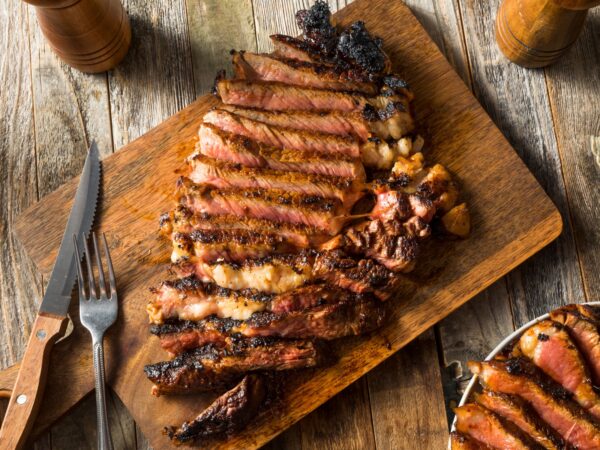
On a side note, you can turn even the healthiest foods into something decidedly unhealthy, depending on how it is prepared. For example, grilling and charring meat can cause cancer-causing compounds to form. So, while it can taste delicious we don’t generally recommend cooking meat this way. One of our favorite ways to cook meat is low and slow in the Instant Pot pressure cooker.
Love Instant Pot Recipes?
Get Your FREE Instant Pot Paleo Recipes Book Here
The stories of those who have healed their bodies on a meat-only diet – often after enduring years of debilitating and mysterious illnesses – are numerous. In fact, most people who follow the Carnivore Diet are not just surviving, they seem to be thriving. And those who have sought objective lab data show biomarkers consistent with health and vitality.
And there is no shortage of physique transformations either!
Stories of Healing (and Adonis Physiques!) on a Meat-Only Diet
Dr. Shawn Baker, MD is an orthopedic surgeon, a pure carnivore and a physical specimen at 51 years of age. He is one of the leading proponents of the meat-only diet and encourages people to experiment and share their stories on his website, Meat Heals.
Dr. Baker says:
“A clear lack of progress in combatting diseases of lifestyle, the specter of bias and frequently confusion in the literature has led many to take matters into their own hands, often with excellent results and often being at odds with traditional recommendations.”
We’re also quite impressed by the experience of Mikhaila Peterson. In this post on her blog she describes her health history, which includes 20 years of intense suffering, which began when she was just a toddler. It was a strict elimination diet that finally helped her experience relief. But it wasn’t until she eliminated everything but meat that she truly felt well.
If you’re considering this diet to see how it makes you feel, I encourage you to check out these the sites above, where you can find before-and-after pictures, comments and testimonials from people whose lives have been changed forever by the carnivore diet.
The Zero-Carb Diet: What to Eat?
I am not suggesting that you or your loved ones embark on a meat-only diet for the rest of your life.
Humans have always been opportunistic feeders. I don’t think a mono-diet is optimal for most people. And I believe there can be great benefit from the cancer-fighting, antioxidant, anti-inflammatory compounds in many plants.
But it might be a valuable experiment to try for a few weeks or months, especially if:
- You have stubborn fat to lose
- You suffer from autoimmune illness or “syndrome” with a constellation of symptoms
- You know that you have a range of food allergies and intolerances
So, what does a meat-based diet look like?
While some people add minimal dairy products like butter or cheese, most people who embark on this radical way of eating to improve difficult health issues are purists. They limit their intake strictly to meat (with mineral-rich salt) and water alone… as well as coffee / tea if you don’t want to give those up.
Here are the meats recommended on the carnivore diet:
- Red Meat: Beef, pork, lamb, wild game
- Seafood: Fish and shellfish*
- Poultry: Chicken, turkey, ostrich, emu
- Organ Meat: Liver, kidneys, tongue, bone marrow, spleen, thymus (sweetbreads)
- Eggs*: Chicken, goose, duck, quail
* Because egg whites and shellfish have allergenic potential, those with autoimmune issues, allergies and food intolerances often choose to avoid these foods on the meat-only diet.
What’s more, many meat-only diet enthusiasts find they react to certain types of meat – like pork or certain fish – so it’s important to listen to your body and pay attention to your symptoms. Most people do best with beef and lamb.
On the carnivore diet, it’s important to eat to satiety (no calorie counting), add high quality sea salts to your food and be sure to choose fatty cuts of meat. Here are a few (very simple!) meal ideas:
- Crispy Oven-Roasted Pork Belly with Maldon Sea Salt (To make in accord with the Carnivore Diet principles, simply pressure cook in bone broth, sear in duck fat and sprinkle with sea salt – omit the other ingredients in recipe)
- Ribeye with Redmond Sea Salt
- Broiled Wild Salmon
- Roasted Bone Marrow with Smoked Maldon Sea Salt
- Grilled Lamb Chops with Celtic Sea Salt
Do you have nagging health symptoms that haven’t resolved on a Paleo or keto diet? Would you be willing to give the carnivore diet a 30-day challenge? What do you think about the information in this article? We want to hear from you… please leave your comments below!
P.S. We anticipate that those who object might say, “What about the myriad of micronutrients in plants that you would miss on a zero-carb diet?” Our response is that the most nutrient-dense food we can consume is meat. And there are organ meats, such as liver, which supply even greater concentrations of nutrients than muscle meats. And, again, we are not necessarily recommending this as a diet to follow for life (although some people do).
As to the FDA’s Recommended Daily Intake (RDI) of certain nutrients, it also is important to remember that those guidelines are created for a population that consumes a high-carb, Standard American Diet – a diet which fundamentally converts your metabolism to that of a “sugar burner” and alters your nutritional requirements.
Gabriel Charles of the blog, Keto Kulture, writes:
“To say that a carnivore is nutrient deficient, based on the FDA’s RDI requirements, is like saying a Tesla Model-S is missing spark plugs.”




I read this article adn have been doing some research. I am 26 years old and very sick. IBS, fibromyalgia, another autoimmune yet to be diagnosed, depression, anxiety, issues with painful urination, and both feet joints are messed up. I have tried the diet for 24 hours and I notice NO stomach pain! Its insane. I am going to continue for a month and see what happens. Hoping to have improvement in chronic inflammation.
I’ve had a lot of the same syptoms for years now. Are you still seeing positive results?
I lost 125 lbs by eating meat only and drinking water in 2010 and found that I just can’t tolerate carbs. I’ve regained as much as 55 lbs since then and was eating what many would believe to be a good diet (LC). I was almost diabetic and was having diabetic symptoms, but here is the part that I brag about the most, my blood test results. My C-RP was a 3.55, over the top of the scale (0-3), and within 2 yrs of eating meat only, it was down to a 0.55, and 2 yrs later, was down to a super low 0.29, so this lifestyle can really lower inflammation. The C-RP number indicates “Relative Risk for Future Cardiovascular Event”, so the lower the better. THIS is what is the most important thing, not weight. I don’t have any issues with constipation and in fact things have been stellar. If I just stick to the plan, everything is great. I will say that I have now realized that there are further health benefits that can be achieved through fasting and so I am doing IF’s now as well. Meat is not the demon that people would like to make it out to be…
I’m 10 days in on the carnivore diet. It has made my joint inflammation from RA pretty much go away. I do have some concerns though. I am MTHFR c677t so keeping folate up and homocysteine down is on my mind. The other main concern is prior to going on this diet my kidney numbers were already off for some reason. I had elevated BUN (27) and slightly lower than normal GFR (80) Do you think I should be concerned about the high protein consumption with these issues?
Coming from a history of losing 100 lbs and improving my health with Atkins low carb dieting, and then moving to ketogenic for greater improvements, I have now switched to carnivore. This is Day 26. The improvement over keto, for me, is already quite apparent, and I’m noticing new joys every day. It’s like the next step for me, the “sweet spot,” and I am LOVING it. I don’t plan on going back to keto.
All cravings for sweet tastes (chocolate fat bombs and ketogenic desserts) and bread-like items (keto bread) immediately left me. My hunger is so minimal and manageable, I am in heaven. I can’t believe how simple, non-compulsive, calming, and satisfying this way of eating is for me. I feel very blessed and grateful, indeed, for having found and tried this way of eating.
My only plant-based food is coffee, which I see no reason to discontinue at this point. I discontinued most dairy (except butter and ghee), and I usually don’t even want eggs. Just meat and fat.
My mental and emotional state is balanced, moods are happy and peaceful, and mind is clear and sharp. I sleep like a baby.
I notice improvements every day. Like, being outdoors and not having flying insects landing on me or biting me, even if I am perspiring. That’s a first for me at this time of year.
Hi Jennifer,
Yes it is blissfully uncomplicated, isn’t it?
I think a lot of people doing keto (like me for years) spend a whole lot of time and effort to make their diet look like “a normal person’s food” e.g. keto-fying pizza crusts, muffins, sweets, etc. It’s so lovely when all those cravings just drop off and you look at that stuff like, “Why did I ever bother with all that?”
Makes shopping a whole lot simpler too.
I am a keto blogger and pretty close to carnivore. I will give it a go in a couple of weeks, after all the food is gone in the house. Will be very interested to see if there are any changes in my body and mind over the time.
Can an all meat diet stop my body from being insulin resistant? I have high blood pressure, high cholesterol and triglycerides. I take Lisinopril, Metformin and allergic to cholesterol meds, that I do not take. I prefer not to take any prescriptions.
Thanks, Linda
Hi Linda!
Thank you for your question. I’m happy that you are seeking natural ways to improve your health.
Several dietary changes can help reverse insulin resistance and diabetes. Low carb and ketogenic (a very low carb, high fat, moderate protein diet) are two with which many people have success. Because the carnivore diet also eliminates carbohydrates, most people would see similar metabolic results.
As always, talk with your doctor before making any dietary or medication changes 🙂
Be Well,
Kelley
Definitely food for thought. One note of caution, though: I have a friend who lived with a bunch of vegetarians and went on an all-meat diet just to spite them (he was a bit of a dick back then) – and he ended up with scurvy. I’m assuming organ meats will reduce this risk? Otherwise, I’d maybe reintroduce lemon or capsicum or something as the first food, just to be sure your Vit C levels don’t get critical…
Personally I find I get SERIOUS reflux when my diet gets quite meat-heavy and I just feel gross when I eat really fatty cuts. This possibly is to do with the combinations of plant foods alongside them though, I will concede. Still, not sure I can last a whole week or more without hommus!!
scurvy is a carb eater condition.
of course there are many variables, from meat quality, type, sunlight, stress, personal defficiencies .
first time i heared of an all meat diet to get it. not a reliable source though
I am amazed how many people ask if they can eat this, or that, That isn’t derived from animal flesh. here is the list it was posted in the article
The Zero-Carb Diet: What to Eat?
I am not suggesting that you or your loved ones embark on a meat-only diet for the rest of your life.
Humans have always been opportunistic feeders. I don’t think a mono-diet is optimal for most people. And I believe there can be great benefit from the cancer-fighting, antioxidant, anti-inflammatory compounds in many plants.
But it might be a valuable experiment to try for a few weeks or months, especially if:
You have stubborn fat to lose
You suffer from autoimmune illness or “syndrome” with a constellation of symptoms
You know that you have a range of food allergies and intolerances
So, what does a meat-based diet look like?
While some people add minimal dairy products like butter or cheese, most people who embark on this radical way of eating to improve difficult health issues are purists. They limit their intake strictly to meat (with mineral-rich salt) and water alone… as well as coffee / tea if you don’t want to give those up.
Here are the meats recommended on the carnivore diet:
Red Meat: Beef, pork, lamb, wild game
Seafood: Fish and shellfish*
Poultry: Chicken, turkey, ostrich, emu
Organ Meat: Liver, kidneys, tongue bone marrow
Eggs*: Chicken, goose, duck, quail
* Because egg whites and shellfish have allergenic potential, those with autoimmune issues, allergies and food intolerances often choose to avoid these foods on the meat-only diet.
What’s more, many meat-only diet enthusiasts find they react to certain types of meat – like pork or certain fish – so it’s important to listen to your body and pay attention to your symptoms. Most people do best with beef and lamb.
EAT WHAT YOU LIKE, THIS IS WHAT IS SUGGESTED
Exactly. Personally I do better without pork, chicken, or dairy. But I do eat seafood and eggs. I have no problem with herbal tea but I find coffee and chocolate no longer agree with me. These micro-variations are personal choices. There are no hard and fast rules.
And then there is the debate over things that are neither animal nor plant (technically speaking) such as mushrooms (fungi) and seaweed (algae). Some carnivores include these and some don’t. Nobody is going to revoke your Carnivore Card if you put a mushroom sauce on your ribeye.
Robin,
If you put mushroom sauce on a steak, you would be an omnivore, by definition…
Carnivore: an animal that feeds on flesh.
Omnivore: an animal or person that eats food of both plant and animal origin.
The intent of this post is not to see who can carry a “Carnivore Card” or achieve carnivorous “purity”, but to find which way of eating produces the most beneficial effects on the body for the individual, and to approach that in a scientific manner.
Kelley
Kelley you are truly a delight, in your writing, handling of all our comments. Ever think of becoming president of the us?? Seriously, thank you again for your posting here, it has been such a help to have a place to follow this. Again, it was hard to explain to people that eating steak was basically what my body always wanted (healthy steak, that is..easy in Italia or France..) and that the vegetatian diet I tried for two years left me run down and without the energy to sing the intense repertoire which is mine, and for which I am physically on the small side as well..
As well as thanks to the other people participating here…
G. Sido!
Thank you for your kind comments and your contribution to our carnivore conversation. You made me smile. I would certainly be delighted to be nominated for something involving Health and Human Services, but definitely not president 🙂
I had a similar experience with the vegetarian diet. And I am so happy to hear that you listened to your body and have been feeling well on the Carnivore Diet. For many people, it is becoming apparent that it is a simple solution for many complex health problems.
Wishing you the very best of health (and belting out your repertoire with full energy!).
Kelly, I wasn’t saying that you were going around revoking “carnivore cards”, although some net pundits do, just pointing out the absurdity of hair splitting on things like this.
Technically a mushroom is not a plant so….
To me what matters is the term “feed”. This is where you derive your nutrition. I think Phil Escott said it best when he said that, on a carnivorous diet , “Meat is the food, plants are the medicines”.
(Phil is a wonderful English gentleman who has cured a debilitating case of psoriatic arthritis with an all meat diet. He has some very interesting research on his blog.)
You are right, a mushroom isn’t a plant. It is a fabulous fungus, which also is… not a meat.
Whether a substance – plant or otherwise – is a “medicine” depends entirely on one’s own biochemical individuality.
Please keep the context of this article in mind: Using the carnivore diet as a healing tool under the auspice of – “One man’s meat is another man’s poison”
Kendra, Our stomach acid is 2 on the acid alkaline table, about the same as a dog/wolf, enzymes interact with the acidity of our stomach to break down meat. Plant matter breaks down through fermentation. Meat, eggs and meat by products are very high in vitamins and minerals. go here.
https://medium.com/@andylindquist/90-days-on-a-carnivore-diet-results-and-insights-8d07692869fe
hi, you are a delight. especially how you handle questions – seems effortlessly.
ive integrated dry fasting , for example dry fast 2-3 days – hydrate , dry fast 1-2 days , eat meat
dry fasting (together with heat and cold therapy , and exercise seem to accelerate ketosis and boost hgh.
anyway, my point is with water and frequency. i think frequency is essential, we eat too much, we eat too often to allow the body to fully be efficient. its abnormal to eat daily imo, let alone multiple times a day.
as for water same thing. i think we drink too much, probably because our body is used to flushing its minerals? not sure, i have adapted to a low water diet, maybe drink 2-3 liters / week.
and lastly, fruit. especialyl while fasting , i feel a huge desire to eat some fruit. thirst is not that prevalent, but my smell sense is augmented and fruit is what attracts me most.
bottom line right now is im trying to combine these 3 . i never met someone to do this combination dry fast , fruit , carnivore. but lets see how it goes.
also, i have the bad habit of wanting to finish whats on my plate, which i think is detrimental.
if you have any input on any of my points, id appreaciate it.
cant wait for next article
Hello Keen4, The only thing that I see, is the decreased water intake. I would say that that needs to be held at a higher rate. As you ware speaking about our ancestral situation, water would have been the one element that was frequently ingested, more than any other likely..
I am an ex dancer, and been a professional singer for many years, also a competition sabre fencer athlete, so acutely tuned to my body and it’s yes! or no!!! . The water intake is essential. Truly, I’d advise ont to skimp on it, as the results will come later, kidney difficulties, etc.
See what this excellent ( I agree with you on that wholeheartedly) KH has to say from her research as well, of course..
Good luck!